Art of Leading
There Should Be A Reluctance In Those Who Aspire To Lead. It Makes Them More Genuine.
Art of Leading
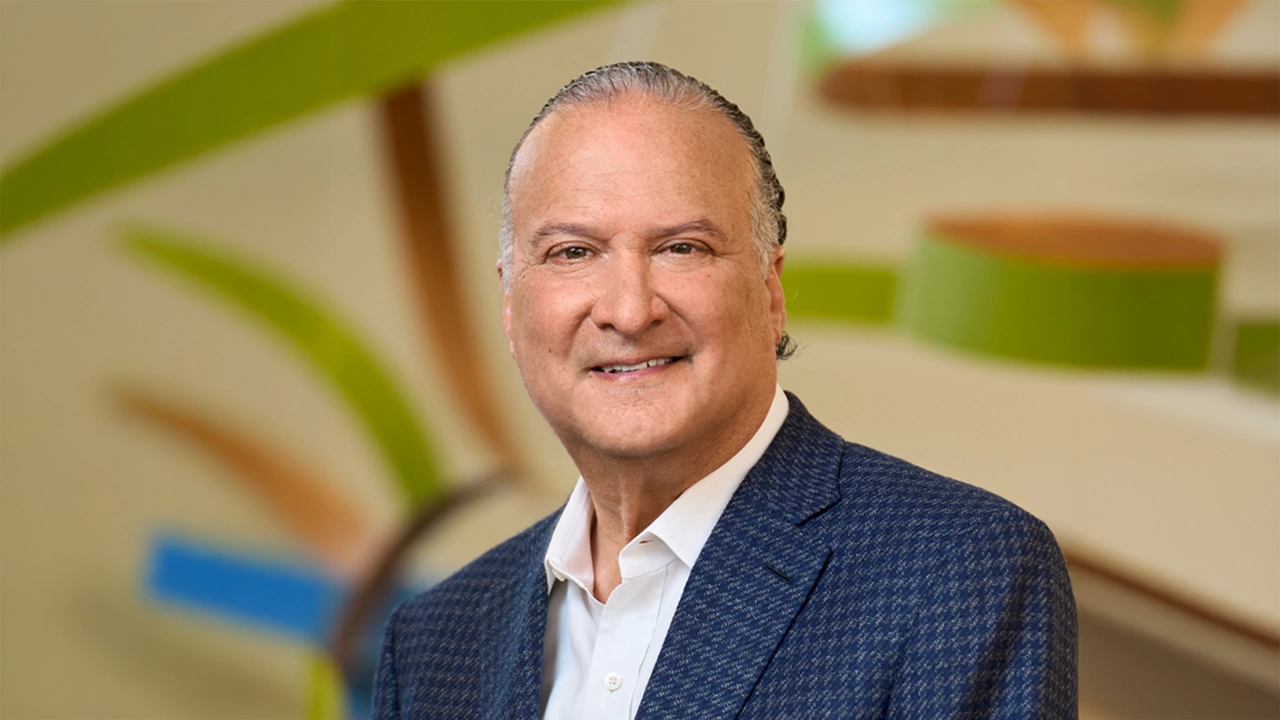
Robert Blum, CEO of Cytokinetics, explores leadership in a conversation led by Adam Bryant. He highlights the importance of authenticity, clarity on your “why,” and self-awareness. Blum discusses how these themes have influenced his approach in a dynamic and challenging industry, where being intentional and vulnerable is crucial.
Q. What is core to your leadership style?
A. It starts with authenticity of values. I don’t think you can fake it, especially when you are leading in a space like ours, where you’re constantly being tested about the integrity of your commitment.
This is an industry where you often are dealing with uncertainties, risks, and challenges, given the unknowns in a very dynamic environment. If you are not intentional and purposeful about your “why,” it will become immediately apparent to others.
Second, because of the nature of what we do, you have to be resilient and persistent but also vulnerable, self-aware, and humble. Ours is a business that will beat you down and hit you when you least expect it, and from all corners of your universe. If you’re not accepting of that vulnerability when you’re knocked down, you will find yourself unable to cope and get back up.
Third, I believe there should be some reluctance in people who aspire to lead. The leaders I most admire and I try to emulate are those who are called to lead. They are called to do something they may not have expected to do, and they are followed for how they do it as opposed to seeking the limelight. It’s that reluctance that makes it more genuine, because those leaders are doing it to serve a mission or purpose that is greater than themselves.
Q. How have you evolved as a leader over time?
A. When I was a young leader, I thought that I was supposed to walk into a room and be the smartest person who always had the answer to what we should be doing next. But it became clear that, even though I might have good ideas in some instances, others didn’t feel empowered if I was imposing my ideas on them.
Over time, you get more comfortable in your skin and you think more about how your job is to enable and empower, to lower barriers, to provide access to resources, and to be an evangelical for the why of we do what we do. It took me a while to get there, but that’s the way I think about my role in leadership today.
Q. What do you consider to be the hardest part of leadership?
A. The hardest part is protecting the well-intentioned scientists who work for us, and have spent decades dedicating themselves to this work, from the cynics and skeptics who take cheap shots and question their motivations on social media. There are all sorts of critics who don’t walk in their shoes, don’t understand what motivates them, and yet what they say and do in social media can undermine them and make their work harder.
We deal in science, and that means pursuing a hypothesis that doesn’t always work out. But you use each experiment to inform the next one. When you’re under the microscope as a public company, some who are shortsighted may think that they know better and can take shots at scientists for their underlying intentions.
The people I work alongside are some of the most selfless, generous people I’ve ever encountered, and that’s rarely appreciated by folks who might want to see a different outcome than maybe we achieved along the way.
Q. What were some early influences that shaped who you are today?
A. Perhaps the most influential person in my life was my father. He was a survivor of the Holocaust and concentration camps. When he came to the United States, he didn’t speak the language and didn’t have any money in his pocket. He built a life for his family and community and, despite having been exposed to the worst of human atrocity, he always had a positive outlook, positive spirit, and a generosity of interest for others’ well-being.
I grew up in Asheville, North Carolina. I was the only Jewish kid in a Catholic school, so I got into a lot of fights defending against bigotry and antisemitism in the ‘70s. That gave me a thick skin. I fell in love with biology when I was in high school. My teacher had a passion for science and biology, and he inspired me to leave the cocoon of Asheville and go to California to be part of the revolution in science and biotechnologies.
Q. What is the best lesson you learned from the worst manager you ever worked for?
A.It’s never about you. There was one leader in particular who started every sentence with “I.” If we are going to be collectively achieving our ambitions as an organization, it has to be much more about “we.” I try to avoid using the word I, and when I see others doing it, I might remind them of how it can make others feel.
Q. What else do you have a low tolerance for?
A. I have a low tolerance for people using information to exclude others. I believe in transparency, maybe to a fault. In my career, I have seen certain leaders withhold information from others in order to protect their power. I have a high disdain for that.
I also have a low tolerance for people using certain words that I think insulate from truths, such as “holistic.” That word bothers me a lot. I don’t know what it means, and I find that people will often use it when they can’t think of what else to say.
Q. How do you hire? What questions do you ask in job interviews?
A. I typically will ask about their most gratifying or fulfilling experience professionally, and how that dovetailed with their personal values. I also like to ask about their greatest regret in their career. If you could go back and reverse one thing that you said or did that might have had an impact on others, what would that be? And I always ask, who had the biggest influence in shaping who you’ve become, and why?
Q. What is one area you’re working on to be a better leader?
A.I’m working on situational leadership—specifically those instances when I need to be adapting my style more to an individual’s interests and needs. People are motivated by different things, and I am working on engaging people in ways that are more bespoke to their interests.
Q. What advice would you share with somebody before they step into their first CEO role?
A.If you don’t seek out feedback, you won’t have a window on ways you can do more and better, because people will be reluctant to be honest with you or hold a mirror up to you. So you have to pursue coaching and 360 feedback purposefully and intentionally.
And the organization will, by its very definition, evolve in ways so that you become more arm’s length as it scales about the things you used to know in much more detail. You have to be accepting of lesser knowledge and enabling of more empowerment and information flows through other channels.