Strategic CHRO
With The AI Revolution, We Are On The Verge Of The Next Leap Forward For HR Function
Strategic CHRO
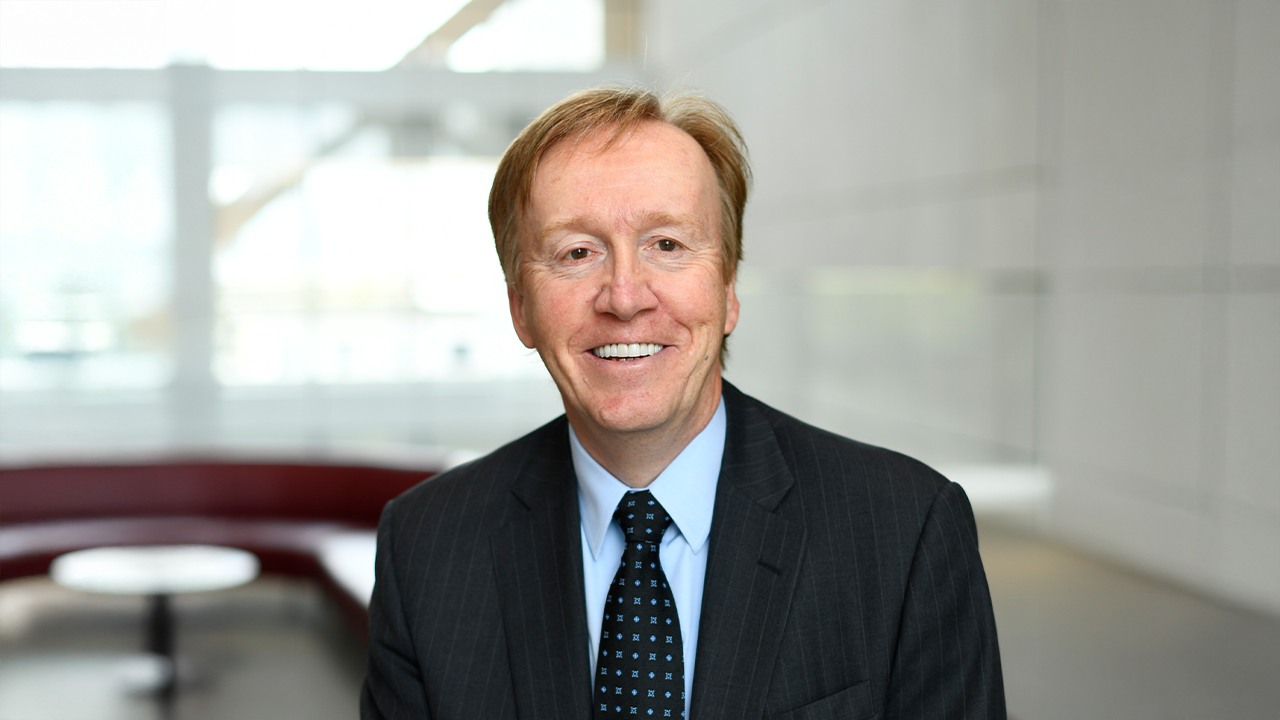
Lucien Alziari, Operating Partner at The ExCo Group and former CHRO of Prudential Financial and Avon, speaks with Adam Bryant about creating organizational calm amid volatility, treating employees as adults with clear expectations, and the enduring fundamentals that define great HR leadership.
Q. What do you see as the big challenges facing CHROs in coming years?
A. It comes back to both looking out and looking deeply within the organization. The looking out part is the world that we live in—the environment within which companies operate, and your ability to build the culture that will help you compete and win as a company. That’s going to be even more challenging, because we live in a very unpredictable world, with a lot of forces that are not within our control.
In terms of looking in, we’re on the verge of the next leap forward for the HR function. We’ve got to get deeply into the work of the company. With the new technology capabilities that are finally available to us and scalable, there’s a real opportunity to be very creative in terms of understanding the work that really makes a difference.
Where does it get done? How does it get done? Who does it? What’s the blend between human and technology? What’s the work that we actually do, and how much of it really makes a difference? And how can we bring together human and technology to fundamentally rethink and redesign the work, and not just tweak it, to be distinct and different from your competitors?
Q. There’s so much polarization and disruption and uncertainty and stress in the world right now. What is HR’s role in helping create a sense of calm in organizations?
A. As the world gets more volatile, one of our noble causes as chief HR officers is to try to make our organizations an island of calm for employees. They can’t leave behind the external world, of course, but you can make it easier for people to get back to what everybody wants, which is respect, calm, some perspective, some predictability, and less noise. That is entirely doable for CEOs and CHROs. It’s going to be one of the hallmarks of winning companies going forward.
Q. One of the challenges in doing that is there have been shifts in expectations between employees and employers, particularly coming out of Covid.
A. The best way to treat employees is as adults, and not as a kind of parent-child relationship. I’m very comfortable saying to people, here’s the deal that an employee has working for this particular company, and let’s be really explicit about that, so that everybody understands it and they know what they are signing up for. That deal is different company to company, but it’s part of being a winning company—they’re very clear about expectations.
Q. The CHRO role has become so much more challenging in recent years. How did you deal with the overwhelming demands?
A. Some people will disagree with what I’m about to say, but I don’t think the role is fundamentally different today than it was 20 years ago or even 35 years ago. The fundamentals are called fundamentals because they are true and lasting and sustainable. That said, the emphasis around some of them, and the speed around some of them, is different these days.
The great CHROs I’ve learned from and respected along the way all have perspective and the ability to figure out what really matters. Where do I spend my time in a way that’s going to make the most profound difference to my company? They are clinical in the best sense of the word. They are very rational and calm, and they don’t get too up or down.
And they are great business leaders. They’re always thinking back from what is needed to compete and win. They are equal partners in formulating business strategy, and then they think about how to contribute to that strategy from an HR perspective. But their fundamental wiring and orientation is that they are a business leader first and an HR leader second. Those fundamentals will continue to be just as powerful going forward.
Day to day, the analogy I’ve often used in my job is from the movie, “The Hunt for Red October.” You’ve got Sean Connery 100 feet under water in his submarine, and he’s using his radar screen to understand distant threats. That’s how I thought about my role as the CHRO. I try to watch the radar screen, and there are lots of blips on the horizon.
I’ve seen some colleagues who tended to chase the ones on the edge of the screen. But I look for the blips that are going to keep on coming closer. That’s my early detection system for emerging themes, so I can always be weighing what it means for us, how important it is, and if it does matter, how do we prepare for it?
Q. You’ve done a ton of mentoring and coaching over your career. What themes come up most often in those conversations?
A. One is about having an enterprise perspective—the ability to see the whole picture from an enterprise point of view. Leaders succeed or fail when they move into a C-suite role for many reasons, and one reason they don’t succeed is that they struggle to leave behind their background and stop relying so heavily on their previous expertise. They have to add on a true enterprise perspective. Some don’t have that and never get it, and that can be a fatal flaw.
Q. What were early influences in your life that shaped who you are today?
A. My parents came from a generation of incredible change. My mother was left on the steps of a nunnery in Dublin when she was six weeks old, and she ran away on a boat to London when she was 15. My father was a war refugee who came over from occupied France with nothing.
I’ve always felt that if I could match the distance between their starting point and their ending point in life, then I would have lived a pretty productive life, because they did really well with some very tough cards.
And because they didn’t come at all from a professional background, I always had this lovely combination from them of full support but no specific expectations. I remember saying to them that I’d like to go to university. Nobody in my family had ever stayed at school beyond the age of 15. Their answer was, that sounds good.
Q. What’s your best wisdom for somebody stepping into a CHRO role for the first time?
A. Each of us is going to be remembered for three things that we accomplish in these roles. I don’t know what they will be or should be, given the unique challenges inside every company. But I can tell you that you’re going to be remembered for three things.
It’s just the nature of these roles. So don’t try to do 10 things. Be very choiceful about the three things, and make sure that they are tied to your organization’s top three things rather than your personal pet projects. Then you need the stamina and drive to stay focused on those three things over several years.