Strategic CHRO
The Best Leaders Are Not Just Curious. They Also Take Initiative And Act On That Curiosity.
Strategic CHRO
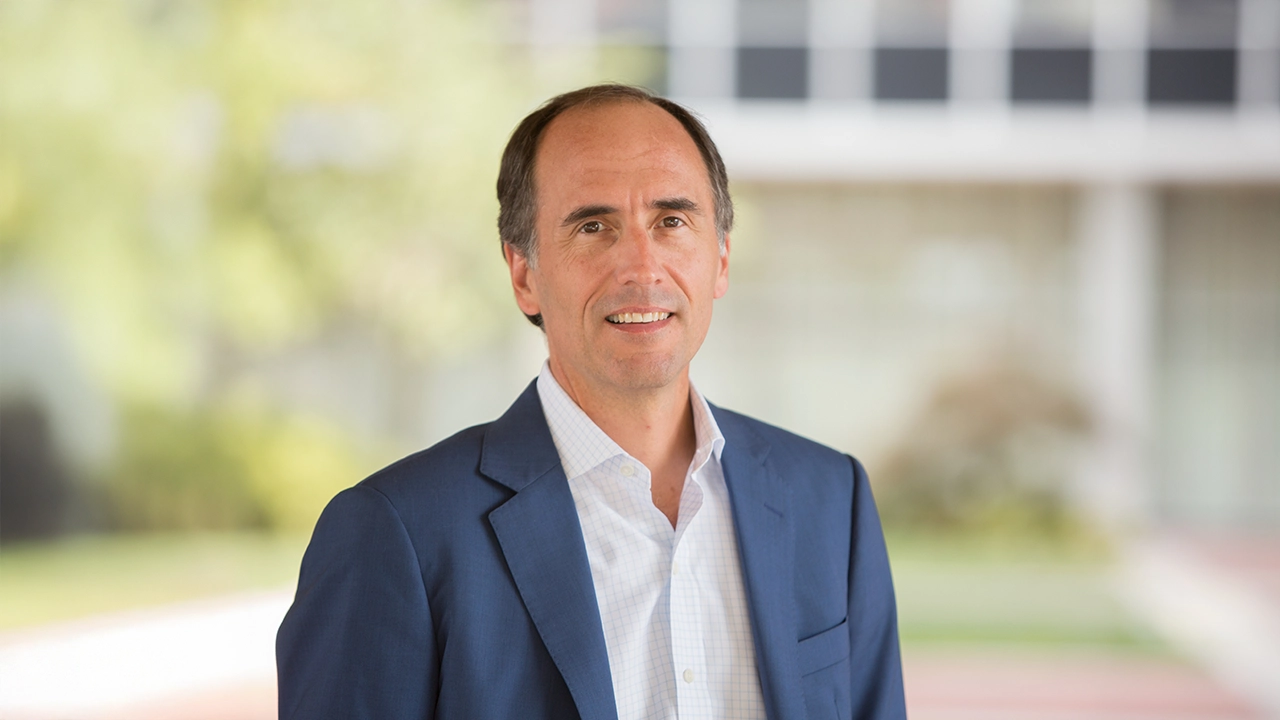
Charlie Whitaker, Chief Human Resources Officer and Chief Compliance Officer at Altria, shares insights with Adam Bryant and David Reimer about adapting to AI, fostering risk-taking environments, and the importance of strategic workforce planning. Whitaker emphasizes the need for curiosity, measured strategy, and making tough decisions.
Reimer: What is top of mind for you right now?
Whitaker: Everybody is talking about AI, of course, but let me try to take it to a higher level. Right now, HR has a huge opportunity. When I first came into the role, HR was focused on judgment and experience-based counseling to the business and processing transactions.
Technology and AI will handle more of the transactional support, and they are also going to be able to inform the judgment and experience that HR professionals have always brought to the table. There’s not a roadmap anyone can rely on for that, because we’re all building it as we go.
How do you upskill both HR and the business? We focus that conversation around the idea of adaptability, and that includes both digital and human adaptability. On the human side, leaders have to create an environment that encourages greater risk-taking, faster decisions, and being agile. That requires skills around change management, resilience, and creating an environment of psychological safety.
We aren’t asking people to take legal risk, compliance risk, or even big business risks. We want people to take more personal risk—moving from an environment where “failure is not an option” to testing and learning. In my experience, that fear of failure is often what holds people back. They don’t want to make a mistake, they don’t want to challenge, and they don’t want to upset somebody.
Bryant: You mentioned judgment in the context of the AI revolution. That’s one of those words that means different things to different people. How do you think about it?
Whitaker: A word that resonates with me in the context of what AI cannot do—and it relates to judgment and wisdom—is the word “taste.” AI can spit out as many choices as you want and as many options as you want. But judgment is required to know which ones we should focus on.
That said, technology can provide data-driven insights to inform that taste and judgment. It’s never going to be perfect, of course. We have to able to make decisions with 70 percent certainty. And those decisions include having the courage to say that something is not working and we have to stop it. Too many things go on too long because people want to be right.
Reimer: How do you think about operationalizing that mindset?
Whitaker: You need leaders and a board that truly, deeply understand the business and the challenges you’re facing, so that the they understand behaviors like agility that you’re trying to encourage. So we may not hit our numbers on a certain initiative because we changed strategy with better information after the initiative was launched, but if they understand why the change was needed, they give you grace for that.
It’s been really helpful to have our company’s compensation committee expand to the Compensation and Talent Development Committee, because it underscores the notion of incentivizing behaviors we are trying to change.
Bryant: All that forces you to revisit the discipline of workforce planning. What’s your approach?
Whitaker: You have to resist the impulse to quickly address a business problem or opportunity with organizational structure. That’s the temptation. You have a new initiative, a new idea, and people want to go straight to structure—moving people on org charts. A mistake that some people can make for any role when you’re planning for succession is to go straight to the competencies and skills that we need. But with workforce planning, and even with succession planning, it has to start with strategy.
One effective technique is to present two different strategies—a transformational strategy and a more measured strategy. And then you ask, what are the skills we need for each of those? Those are going to be very different skills, and that’s why it’s so important for the decision-makers to be well-grounded on the strategy.
Reimer: What are the universal leadership traits that separate the very best leaders under any scenario?
Whitaker: The people I’ve seen who are really successful have curiosity and they are never fully satisfied. And then you have to follow that up with initiative and self-imposed accountability to act on that curiosity. You have to act on that constructive dissatisfaction.
And the obvious caveat is the “constructive” part. We’ve all seen leaders who are never happy, who push too hard on the organization, and who may get what they want in the short term. But that approach is not going to lead to followership and strong results in the long-term.
Bryant: What is it about your background that prepared you for navigating a role that has so much ambiguity and uncertainty?
Whitaker:In grad school and earlier in my career, I operated as if things were predictable. To give you an example, I went to law school by getting off the waiting list. It was a very good school, and I went in with the mindset that I was starting at the bottom of the class. And you couple that with advice from my father, who was a lawyer, who said, “All work and no play makes a good lawyer.” So I treated law school like a 15-hour-a-day job. I over-prepared for everything.
I took that approach into my career. I over-prepared for everything, which means I was trying to predict what was going to happen. I had a backup slide for every question I could possibly get. That worked pretty well, but I got some important advice from my boss, who was an over-preparer, too. He said, “When you’re presenting to the board, don’t look at your notes. Just tell them how you’re feeling about whatever issue is being discussed.”
We’ve tried to vocalize this concept with the entire organization. We don’t want people coming to leadership meetings worried about backup slides. You’ve got to give people the latitude not to have the answer. They can just say that it’s a good question and they’ll come back to you with the answer.
Reimer: What do you consider to be the hardest part of leadership?
Whitaker: Picking the best team. Getting A players into critical roles is so important. I’ve made the mistake more than once of letting someone stay in a role too long out of loyalty or not wanting to make the tough decision.
But I’ve had moments when I moved in an A player, and they just had such a multiplier effect. I was shocked not only by the quality of their work, but how entire teams they collaborated with went from being trail horses to racehorses. So the hardest part of leadership is getting the right team and making the tough calls to secure the right team.