AI + Leadership
In The AI Age, Leaders Must Invest Time To Create And Foster Environments Of Curiosity
AI + Leadership
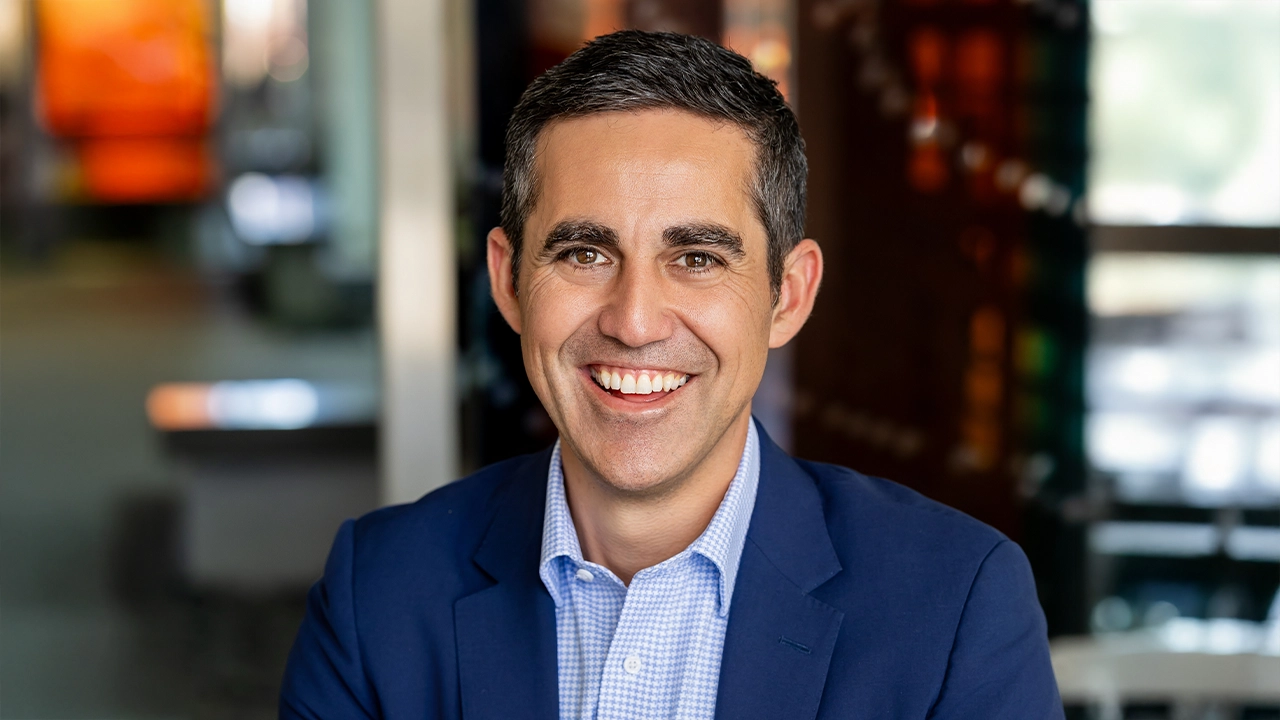
Kave Niksefat, SVP, Global Marketing and Access at Amgen, explores the role of AI as a co-creator- not a replacement, the imperative of curiosity, and leading through ambiguity with David Reimer, CEO of The ExCo Group, and Adam Bryant in the latest interview from the AI + Leadership series.
Reimer: First off, thank you for playing a key role in launching this interview series, which was inspired in large part by a conversation you and I had last summer. I shared my frustration with you about so much of the “leadership implications of AI” content being produced was so esoteric as to be pablum. Then you started telling me about how it was actually impacting your work and your thinking in meaningful and pragmatic ways. And here we are.
Niksefat: I’m glad that that was a spark. And after our conversation, I spoke with my counterpart at one of the big tech firms, and she showed me how they were working with non-tech marketers to redo marketing processes end-to-end using basic tools. That inspired my confidence that you don’t need to be a tech bro to get 90 percent of the value from AI.
Reimer: Now that we’ve set the table, how has your thinking evolved about how to
leverage AI?
Niksefat: Our focus initially, just like it was for many others, was on efficiency. AI can do many things faster, which leads to little bits of cost savings here and there overall. But it also quickly became apparent that there’s no long-term advantage that was going to be gained from that, because everyone’s going to figure out the same efficiencies over time. All you do by not adopting in that efficiency phase is to choose to lose to a competitor. It’s kind of like short-selling. There’s only a defined amount of value that can be created there.
So that’s when we started to think more about ways to gain greater effectiveness with AI. How can we use AI to actually drive incremental revenue? Market research is one area where we’re spending most of our time. For example, we would engage with 50 people to get their ideas, and then use those insights to create streamlined personas based on the aggregated themes. That informs how we analyze public conversations and forums to better understand how people talk about our products, which in turn gives us insights about existing markets or new products that we can bring to market.
Another key moment for me came when I went to see my doctor for my physical. He used an AI tool to help interpret my lab results and then said to me, “Thank God I’m not too many years from retirement, because this thing is going to replace me.” That exchange made me realize AI could influence clinical decision-making and which options get surfaced. And that unlocked this idea for me that AI is going to start to change the behavior of people in the medical ecosystem. So we need to use AI to do what we already do, but to do it better, and we also need to use it to enter new markets that are created by AI.
Bryant: What are the practical implications, and leadership implications, of all that?
Niksefat: AI is now an arbiter of information. So how do we make our information clear and structured so both people and AI-enabled tools interpret it accurately? From a leadership perspective, you take that approach—that we are in some ways writing for AI models that will repackage our information for our customer base—and turn that into a story and put it in context that can be understood by our own teams in ways that drive dreams and opportunity rather than fear. The goal is to not make it scary, and to give people the right to try and play. We drove very high adoption in my part of the company, with a strong base of super-users.
The big shift we’re making, now that we’re past the adoption curve, is to focus on value generation. So we’re saying, “You’ve all played with it. Now let’s add structure to it. Here’s a place we’re going to make a big bet. Let’s take five of you and have you focus on trying to drive value.” What I’m desperately trying to avoid is the phenomenon of death by 1,000 pilots, where you pilot everything and you scale nothing.
Reimer: Do you think AI is capable of generating actual insight?
Niksefat: It’s close, but it’s not fully there. If you provide it with a particular set of information, and with the right user and the right prompts, insights can be found. We’re not at the point yet where I can just throw an entire data set at it and ask it to give me the three most important things. It can do a lot of digging for you and help you find patterns. Does it know whether a pattern is totally relevant, at least in what we’re doing? I don’t see it yet. But it’s still very much a co-creator, and not a self-creator.
Bryant: David and I interviewed somebody recently who made the smart point that AI is essentially democratizing functional expertise. If that is true, then what are going to be the most important leadership skills in the future?
Niksefat: I agree that AI is democratizing functional expertise. This is where it’s also a little scary, because it can also democratize a complete hallucination in domains that you might not fully understand. This idea of democratizing information comes with an even greater need to drive people together and for teams to find those points on the seams and to make sure there is still that interconnectivity overall.
If you look at some of the past digital value that’s been created, it’s when two seemingly non-interlocked things all of a sudden smash together. It’s like how Amazon succeeded with an amazing digital front end combined with incredible distribution logistics. There’s where unbelievable value will be created, because this technology can help us pull together otherwise non-related components. The ability to create and foster environments of curiosity becomes incredibly important, because that’s where you’re going to find the little sparks of ideas that you can scale.
Reimer: Is there an aspect of the AI conversation that’s playing out right now that makes you think the people are missing an insight?
Niksefat: What I am generally finding is that AI is not as good at data analysis as people would like to predict. I don’t know if that’s going to change. But AI is fundamentally a word-based algorithm. It’s not a numeric algorithm. And so what it’s doing, in a lot of cases, is offloading data over to Python processing and coming back. If you don’t know how to read the Python code it’s writing, you actually have no idea how it’s doing the analysis. We find a lot of hallucinations over there at this point.
On a separate note, one piece I’m not sold on is this idea that it’s going to eliminate a very large number of jobs. There is going to be near-term disruption, but just as with previous big advances, new jobs ultimately are created on the other side, especially in knowledge economies.
Bryant: If you were speaking to an audience of CEOs and board directors, what are your top do’s and don’ts for companies that want to embrace AI?
Niksefat: The top “do” is to drive adoption and awareness, because you’re going to need that under any scenario. Second, find a couple of platforms that you are going to place a big bet on. And third is to work backward from value—think of where you generate your value and try to create solutions against that value, as opposed to launching a bunch of little pilots overall.
Think about how your customers are going to use this technology, and try to create an advantage for yourself by matching your products and services with where your customers are going with the technology. I think we’re a couple of generations of updates away from this technology becoming unbelievably useful. But you want the right base in place to be ready to act in that moment when the technology and your business come together.
Reimer: There’s so much ambiguity in the world overall, and in the field of AI in particular. What is it about your background that makes you comfortable leading in situations like this?
Niksefat: When I was growing up, we had to go through a lot of change as a family, in part because of economic conditions. So I got used to looking into the short term and not being afraid to turn left when we saw a new sign on the road.
That comfort also came from working two to three dozen jobs before starting out in my professional career. And I worked as a consultant early on, which means you are constantly changing what you are working on and how you are working. All that makes an environment of change just feel very natural to me.
And even though I’m super comfortable in that kind of environment, I also can recognize when other people aren’t super comfortable. I can see when people start to show fear in their facial expressions.
A trick I learned shortly after joining the industry was to always set context and share information. That’s so important for keeping people with you, to not scare them, and to help them understand that not everything is going to change all at once. So I will say, “Here’s what’s going on, here’s what I’m thinking about, and how I’m reacting to it. This is probably the direction we’re going to go until we need to shift.” Are there still people who will feel like they’re on a roller coaster? Absolutely. But we’re just trying to keep them in the car, rather than having them jump out of the car along the ride.
Bryant: What’s the most lasting leadership lesson you took from a job that you had before you were 20?
Niksefat: The best management lessons I learned came from when I was bagging groceries. You really get to see how people treat others, and how to motivate people. And if you’re going to do something, you do it well. I like to get my hands dirty. I tell my colleagues all the time, I used to bag groceries, I can certainly work on a PowerPoint.
Reimer: What’s the toughest question that you don’t know the answer to about AI?
Niksefat: In terms of AI and its role in organizations and work and leadership, I think it’s going to be omnipresent. But I don’t know exactly where. It’s this new tool that’s going to be intertwined in everything we do for the rest of our lives. But it’s hard to imagine at this point where it’s going to go.
It’s like the computer 30 years ago. You could predict that it was going to do incredible things, but nobody could guess it was going to create an iPhone and ultimately an entire mobile economy. But this fundamental new technology is going to be included in everything going forward. This is our next 20- to 30-year revolution, and then something else will come along.