The Director's Chair
Boards Have To Be Anchored In What It Takes To Meet This Challenging Leadership Moment
The Director's Chair
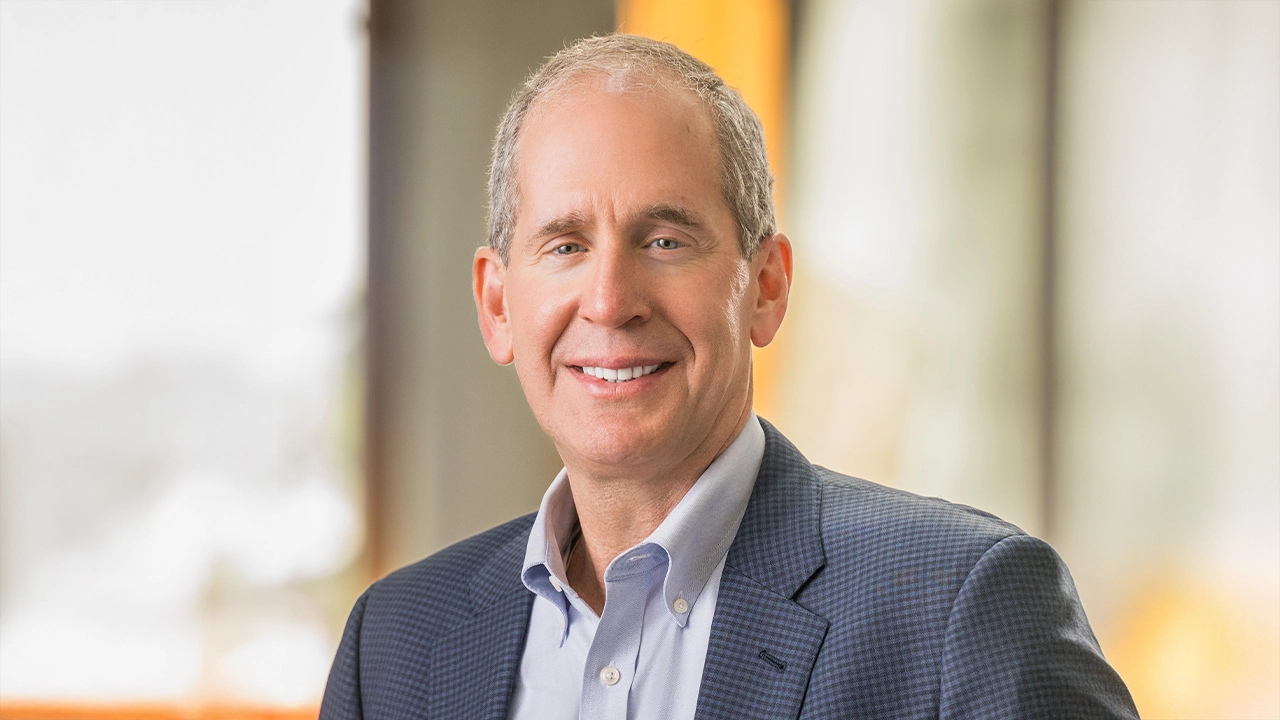
Mark Hawkins, a veteran technology leader who is the lead independent director of Workday, chairman of Toast, and a director at Cloudflare, shares leadership insights with Adam Bryant and David Reimer. He highlights the importance of leaders meeting the moment, AI’s impact on governance, and the ever-changing definition of risk.
Reimer: How should boards be thinking about how to navigate this era of endless disruption and ambiguity?
Hawkins: One theme I talk about a lot is how leaders need to meet the moment. Every board needs to be in a constant learning mode. Supply chain and resilience are obviously big issues that we need to get our heads around. The current environment reminds me of that expression that nothing happens for decades, and then it all happens in hours. We’re living that now.
Boards need to pragmatically go a level deeper, get away from the headlines, and really think about what all the change means and how to best mentor and work with management to understand how the company is evolving and needs to evolve.
AI is, of course, another big priority. I’ve spent four decades working in technology, and I’ve lived through lots of technology platform shifts. If anything, people are probably underestimating AI. We see a lot of headlines now about how so many AI initiatives are not working. A lot of people forget that the start of the dot-com era was the beginning of a platform that’s changed the world with the cloud.
This, to me, is bigger. We shouldn’t be just thinking about the here and now. I’m really encouraging boards to go beyond thinking that they need a director who’s an AI specialist. Instead, you need every single board member to be committed to learning about AI. The number of people who are using AI in companies already is remarkable. So you have to ask yourself, has governance caught up?
It goes back to what I said earlier about the importance of meeting the moment. We have to be anchored in what it takes to meet the moment and engage ourselves on challenging questions. Is the vision clear enough? Is our planning clear enough? Are we adapting quickly enough without swerving the bus? Are we calibrating the company to match the rate of change?
Bryant: For every board, and every leader, there’s a balancing act of sticking with what has worked while also challenging yourself. How do you think about that?
Hawkins: Complacency is dangerous. I’m a big believer in the mantra of “better, better, never done.” Even if you’re the best at something, you’re not done. Success is never final. At the leadership and board level, companies need a culture that‘s all about the future—getting better and keeping “performance tension.”
That means that we’re always stretching ourselves to do better in a world that’s rapidly changing. To create alignment, the board needs to understand management’s vision and detailed pathway for how we’re going to win. It’s a never-ending dialogue. Are we being ambitious enough? Are we taking big swings? You need that performance tension as you are setting your goals. You have to be pushing hard to get to the future, and hopefully you’re moving at least as fast as the outside world, if not faster.
And you have to ground your strategy and performance in the outside world. An amazing founder once gave me some very constructive coaching. Someone on their team was celebrating the fact that they achieved great success by a specific measure, and yet the company overall lost market share during that same period. So you have to stay focused on whether you’re progressing in the outside world.
Reimer: How are you thinking about risk in this environment?
Hawkins: Risk is never monolithic. You’ll hear people bring up risk as if it were, and so I also mentor the teams I’ve worked with to break down risk. As just one example, product development is riskier than accounts receivable. AI merits more time, more energy, more understanding, because it’s now in the middle of probably every boardroom discussion.
So risk is a highly nuanced model that should be adaptive all the time, because if we get too comfortable with our own definitions of risk, we’re probably missing something. That said, it’s hard to find a Black Swan, particularly at a time like the present, when a super-cycle of innovation is coming at us.
I’m not saying somebody shouldn’t look at that, but I’m a pragmatist. Maybe it’s because I grew up in a rural farm town, but my approach is more about dealing with what’s right in front of us. I want to make sure we don’t dilute our time and energy from tackling that.
Reimer: What is some of the best advice and wisdom you’ve heard in your life and career?
Hawkins: The best advice I ever got was from my mother. She would always say to me and my four brothers that in every aspect of your life, it’s all about the people you surround yourself with. I would bring friends home and she would tell me which ones she thought were good or not good. And she was right every time. That made me intentional in all aspects of my life about the people I surround myself with.
I also learned a tremendous amount from Marc Benioff [the CEO of Salesforce]. Marc always said that you have to approach everything with a beginner’s mind. If he asked me to look into something, he would encourage me to deeply study the issue to understand it as best I could, and then he and I would have a conversation. And he would always say we have to come at the topic with a beginner’s mind.
Marc also always said that if everything’s important, nothing’s important. And we didn’t just say that; we acted on it. We regularly went through the most intense prioritization exercises that I’ve ever experienced.
Bryant: What was another lasting leadership lesson for you?
Hawkins: It was 1983, and I’d been at HP for about two years. That year, the company decided that it had to cut costs. The announcement was actually made over a speaker system—like in schools.
As I remember it, they said, “We’ve hit a hard spot, and we’re going to have to do something. We think it’s going to last for about six months, but we think we can grow through it. You all are valuable members of this team, so we’re going to ask you to work only nine out of every ten days during each two-week period. But you’ll get 90 percent of your pay. We chose to do this as opposed to laying people off.”
It was my first really powerful view of what leadership looked like. They inspired the team, and everyone worked even harder to pull the company through that period. How did they engender that trust? They leaned in for us, but we needed to lean in for them. I was about 24 at the time, and I remember thinking, that’s leadership.