
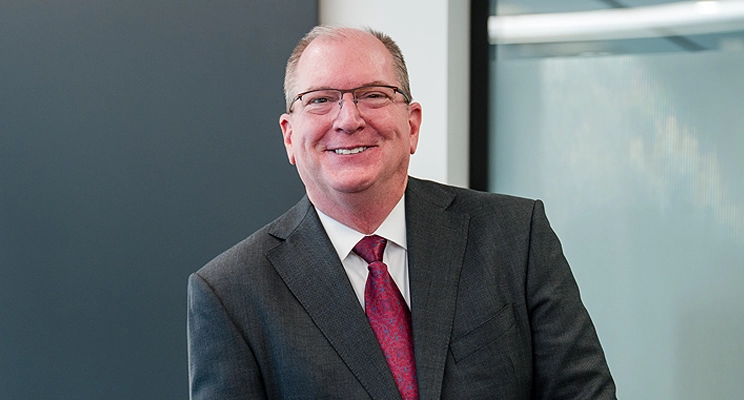
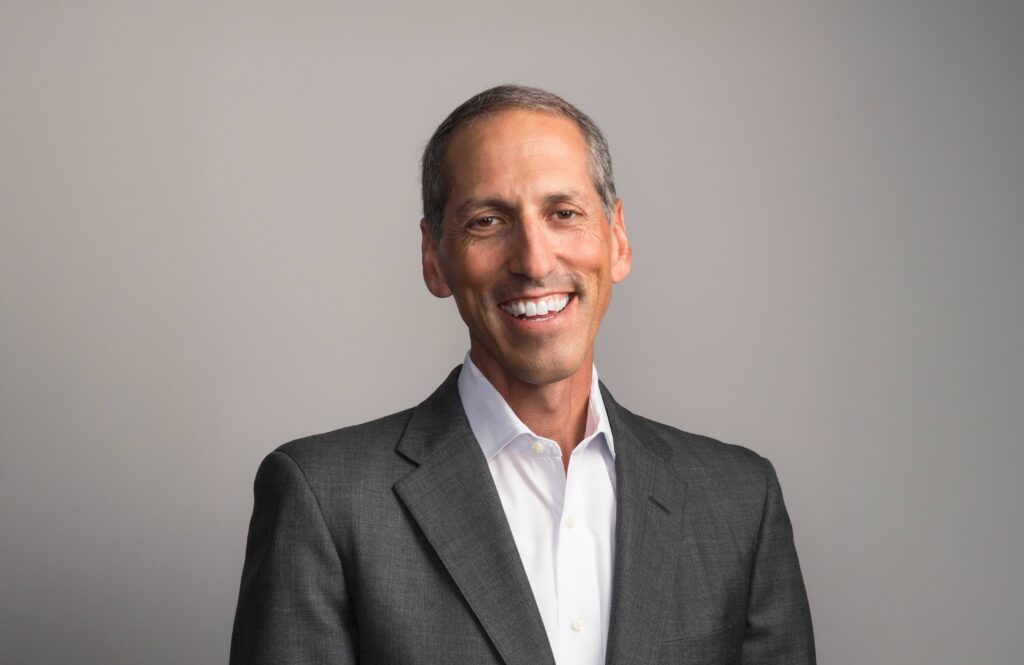
Peter Gleason, President and CEO of the National Association of Corporate Directors (NACD), shared timely insights withThe ExCo Group‘s David Reimer and Adam Bryant on the importance of providing sound advice, oversight, and counsel, embracing diverse perspectives, and viewing resilience as a muscle that enables progress.
Reimer: What are the X-factors that set the best directors apart these days?
Gleason: It’s the willingness to acknowledge that they’re not necessarily the expert. Things are moving so fast right now, especially in the technology space. It’s the ability and desire to stay current that really sets people apart now. It’s that continuous learning mindset of asking, how can we do this better?
Bryant: How do you think about the “noses in, fingers out” adage at a time when there are so many urgent and important short-term issues for boards to consider?
Gleason: It goes back to the core of the company strategy. What’s the mission? How do you stay engaged at the right level to help management deliver on that strategy? You’re not there to operate. I frequently remind newer board members that they are not there to be an operator. When you step in the boardroom, you’ve got a whole team who are paid to do that. Your job is to provide advice, oversight, and counsel.
It’s also helpful to bring in experts for board dinners on topics like technology, particularly AI. That way, the whole board is engaged around the issue, and everyone is singing from the same hymnal because they’re all learning at the same time. It level-sets the board on what the dialogue should be around these issues, particularly around what management controls.
Reimer: There’s a lot of polarization in our society. What do you see as the role of the board in creating a sense of alignment within the metaphorical four walls of an organization?
Gleason: It’s a challenge. We all talk about the value of diverse perspectives in the boardroom, so that we can see challenges from different angles. That said, sometimes you have to remind people that we’re all on the same team and we need to be pulling in the same direction. People may have different perspectives, and that’s fine. We don’t have to agree on everything. What we have to agree on is the mission and values of the organization, and how we drive the company forward.
I’ve heard some directors talk about their own boards in terms of it being too aligned on the left side of the aisle or too aligned on the right side of the aisle, and that it should be more balanced. But that’s not a skill; that’s an opinion. The focus should be on the skills that are needed to move the company forward.
Boards need directors who can listen as well as talk. They should be disagreeing on occasion. And boards should be bringing in all these different experiences and backgrounds to bear so that they can perform at the highest level for the company. But directors can’t be overbearing in their dialogue.
Bryant: Resilience is one of those words that people are talking about a lot these days. How do you think about resilience in the context of boards?
Gleason: I think of resilience as building the muscle to move forward. It’s pushing through the challenges we face on a daily basis and building that muscle so that you get stronger and better to move forward even faster.
When I was a little kid, my parents would always say, “When things get tough, put your head down and keep moving forward. Don’t stop and worry about where you are and why you’re there, because you’re going to get run over. Keep pushing forward.” You’ve got to build that muscle, so you know how to better take on the next challenge.
The pandemic is a good example. Nobody could have trained for that. But many people successfully managed through it and built that muscle memory for whatever the next challenge might be. Boards have to constantly do that. They’re always going to be faced with the next issue, whether it’s supply chain disruptions, geopolitical issues, or economic forces that are out of your control.
Reimer: What are some concrete steps boards can take to make sure the CEO and the leadership team are best positioned to succeed in a world that won’t slow down?
Gleason: That’s the foundation of our Blue Ribbon Commission this year. And when you boil that report down, it’s about trust. How do you build that trusting relationship between the board and the CEO? We have a lot of recommendations in the report, but it starts with clearly defining roles so that you’re not in an ambiguous situation when some new issue comes up. The board, the lead director, the committee chairs, the management team—they all understand the expectations for their roles.
It’s about having explicit conversations about expectations. What will help us, both the board and management, succeed? And how do we align ourselves so that we’re moving in the same direction in a positive way? There are always going to be challenges, but what tools can we use to make sure that we are in the best position to succeed?
Here’s an example from my own experience with my board. They gave me feedback that the quarterly reports I was sharing were too spaced out, and that it would be helpful if I sent a monthly update on the big issues and where we stood financially. So, I started writing a letter every month to the board. And then I started having quarterly calls with each board member, just one on one, to talk about any issues that were on their mind.
Bryant: You shared your parents’ advice earlier on resilience. What were other important influences for you?
Gleason: I’m the youngest of six kids. My parents were educators. They both worked the whole time I was growing up. They were both on boards, as well, so I got a sense of that early on. My dad was superintendent of a school district, so he had a board of citizens elected to oversee him. He shared a lot of his challenges at the dining room table.
My parents were great role models, and my brothers and my sister were great role models. They were all athletes, and I played football and lacrosse. It shaped me from a leadership perspective, because everybody on a team comes from a different background, and they’ve got to figure out how to work together to a shared goal. That’s the way I look at leadership.
Reimer: What do you consider to be the hardest part of leadership?
Gleason: Time management. CEOs have to deal with so many issues, and you feel like you run out of time. There’s always something else that you could be doing, and you’ve got to figure out how to balance your time. That’s why we see so many CEOs with health issues. They don’t have time to take care of themselves, and the pressure is just massive.
Recent






 English
 English (UK)