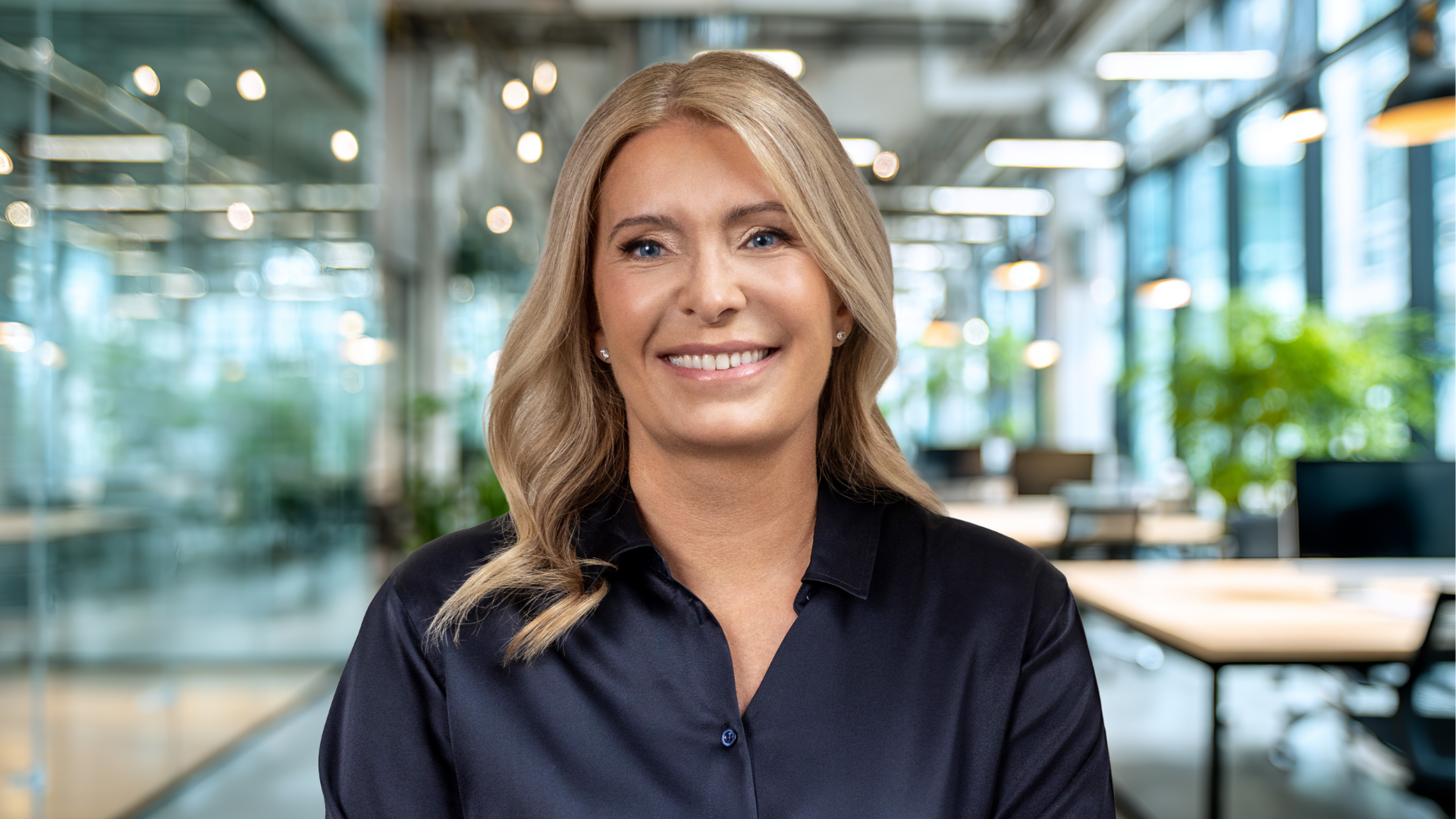
Carolina Dybeck Happe, Chief Operating Officer at Microsoft, shared her key leadership insights with Adam Bryant. Key themes include how cultural fluency and collaboration drive transformation, why leaders should evaluate people by what they deliver rather than what they say, and how to use a traffic light framework to bring people along during change.
Bryant: Your career includes working at companies that were navigating some big transformations, including Assa and GE, and now you’re at Microsoft. What’s your approach to tackling these complex challenges of managing change?
Dybeck Happe: Cultural fluency is a big part of it. I’ve lived in seven countries and worked in more than five industries. That experience helps me understand people, which is critical for driving transformation, because culture can be the biggest limiting factor to change.
I grew up in Sweden, which also shaped my approach to leadership. The values that are important to me are respect, curiosity, and collaboration. They are fundamental in Sweden. It’s a society that is pretty flat in terms of hierarchy, and so you grow up learning how to collaborate.
That approach has helped me every time I’ve stepped into a new role. As just one example, when I went to work for Assa, I was 29 years old. After I started, I came across the original job description for my role, which said that the right candidate should be German, over 40, and have experience in heavy industry. Plus, keep in mind that this was a largely male industry.
Because I didn’t check any of those boxes, people were a bit surprised when I showed up, but I focused on the basics. What’s my mission here? How do I do it? The goal was to create one company from multiple acquisitions. And I helped do that using respect, curiosity, and collaboration.
Bryant: How do you decide whether to take on a new challenge in a new industry and new company?
Dybeck Happe: I have to be clear with myself about why I want to do this. Who I’ll be working with is also important. You have to make sure you’re aligned with your boss in terms of mission and values. And once you deliver for them, they will be the person who creates the next role for you.
I also have to be clear in terms of my own assessment of whether I can win the race, what will it take to succeed with my boss and my team? Because it’s only together that we’re going to be able to win.
Bryant: Where does your drive come from?
Dybeck Happe: I’ve always been someone who moves toward big challenges. People have told me that I can move mountains and that I’m good at getting people to listen to me. This comes back a bit to Swedish culture. Yes, there are org charts and hierarchies, but the org chart doesn’t necessarily tell you who people actually follow.
It’s about engaging people, bringing them together, and getting them excited to be a part of an ambitious project. I’ve always done that from a young age.
Again, it’s about respect and collaboration. You want to empower people and have everyone do what they’re good at. That’s a much better approach than trying to control everything yourself or trying to be hierarchical.
Bryant: How do you decide who’s going to be a part of your team?
Dybeck Happe: The more senior you get, it’s all about how you choose your team, how you develop your team, and how the team performs. To choose people for my team, I learned early in my career to look at what people have delivered versus what they say. Some people are very good at presenting, but that is not always matched by what they deliver.
Bryant: You mentioned the cultural challenges that are at the heart of any transformation efforts. What’s your framework for bringing people along?
Dybeck Happe: I use a traffic light metaphor. The green is for the early adopters, the people who believe in what you’re doing and will take risks to make it work. You may think you need to spend less time with them, but the reality is that the more time you spend with them, the better, because they will be even more successful.
And their success then becomes a motivator for the biggest part of an organization, which is the yellow category, the people who listen to what you are trying to do but are on the fence. Maybe they want to learn more, but they may also be a bit skeptical, wondering if I’m going to stay or doubtful that what I’m proposing will work here.
But what happens with the yellows is that when they see the success of the greens in their own organization and the impact they are having, that convinces them to join the ride. At that point, you have a big part of the workforce moving forward.
And then you have the reds, who aren’t interested in changing, even if they say they are. Earlier in my career, I spent way too much time trying to convince them. You want everyone to understand why this plan is so great, and you want everyone to be engaged and move.
But the reality is that you’re not going to be able to convince them. So the trick is not to spend too much time with them and instead focus on the other groups. Because then, over time, either they change by themselves or they move on.
Bryant: Given the transformational role that AI is playing, what do you say to encourage employees to use it?
Dybeck Happe: I tell people to please embrace the change. Because there are two alternatives, either you are going to embrace it and be part of driving the change, or you’re going to be shaped by it. As a leader, you have to show that you and your teams are embracing it and experimenting yourself.
For example, Satya (Nadella, Microsoft’s CEO) set aside time at a recent meeting for all of us to vibe-code. Within an hour, I was able to build a basic music app. It was fantastic to see how it worked and how to use the prompts. I did the same thing with my team.
Given the breadth, power, and pace of the AI transformation, this is going to test leaders as they’ve never been tested before. That is hard, but it also doesn’t change the fundamentals of leadership. It’s not about technology. It’s really all about change management, and that comes back to those core leadership qualities that we talked about earlier, respect, curiosity, and collaboration.
Recent