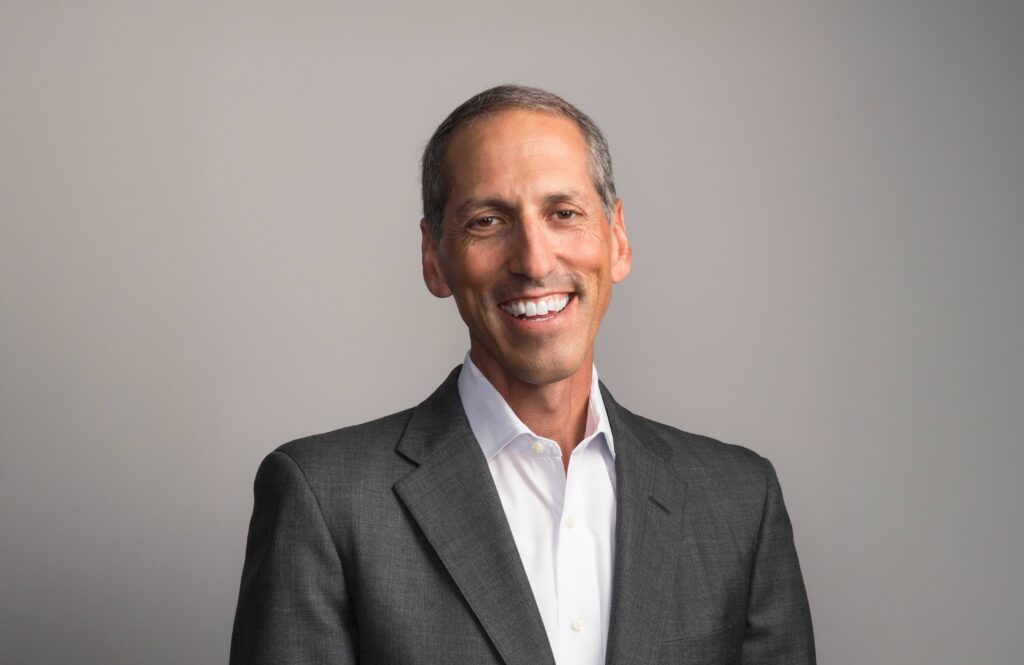

For the second installment of our new interview series with top leaders in the talent and learning field, we spoke with Shawna Erdmann, senior vice president of learning at Comcast, who shared smart insights with me and my partner in this series, Adam Bryant, managing director at The ExCo Group.
Reimer: You were a school principal early in your career before shifting to the corporate world. How did that role shape your approach to leadership?
Erdmann: I decided in my first year of teaching to get my administrative credential. I was interested in the idea of amplifying influence at an administrative level and being able to set the tone and culture for a school. You’re really operating like a mayor of a small town as a principal because you have so many stakeholders.
You would think that it’s all centered around the students, but it’s just not. It’s everything from bus routes to how things affect the environment to neighboring homeowners complaining about kids throwing rocks into their pool. It’s just a microcosm of the larger world.
I learned so much about leadership in my first two years as a principal, particularly how you manage different stakeholders. From unions to parent groups to students to cafeteria workers to the custodial staff, there are so many people who have a point of view about things that should be done. I had a really strong mentor my first year who was a veteran, and he shared some sage advice — that you will always have bullets coming at you, but remember that they are not real. So you have to face them and respond.
Bryant: Other key lessons you learned from that time?
Erdmann: You learn from mistakes. And you have to make mistakes. It’s the old adage that you’re not skiing hard enough if you’re not falling down. But it’s how you respond and carry yourself forward that separates people. What I learned the most from that role was the importance of humility, empathy and adaptability — being able to adapt quickly to what’s being asked of you and being able to read the environment.
There were multiple dialects and languages spoken in our school, and we had to translate everything into three languages. Parent groups would ask for interesting things, like an ox to plow the field for a school garden. It was never going to happen, of course, but to them it was a reasonable request. You have to manage the different points of view that come with so many stakeholder groups.
You have to manage the different points of view that come with so many stakeholder groups.
It doesn’t mean that you have to take everything into consideration and do something about every single thing that somebody asks. It’s more about how you listen, how you have empathy, how you acknowledge, and how you respond in a caring way that gives you a lot of wiggle room to do other things or help them see another point of view for the direction that you want to take.
Reimer: If you were speaking to a roomful of people who were going into your field, what advice would you share with them?
Erdmann: Read your environment. You can’t take playbooks from what you’ve learned or what has worked well in the past and apply it and think you’re done. You have to know that you don’t have all the answers. Be a learner yourself first and role model that. You will learn the most from listening and understanding what’s needed in the environment. And the broader environment will change your approach, as well. The playbook that I thought was going to work before the pandemic has been ripped up and thrown out the window.
The days are gone when you’re going to spend several days in a classroom listening to somebody talk about whatever the topic at hand is. Many people are fatigued by these Zoom calls, too, and they need more interaction. So how do we recreate that and really energize people through learning? My advice would be to start thinking about that in a different way to help people make new skills sticky.
Bryant: How do you think about calibrating the right amount of content to push out?
Erdmann: It’s the Goldilocks question, and you can give people too much. We’re all in cognitive overload right now, so you have to do less and do it really well. There are so many online courses now, but it’s easy to feel overwhelmed by them all.
Leaders can feel the same way. They’re trying to build their skills, run a business, grow their team and then they’re trying to overlay everything else they’re being asked to do. Learning just sort of falls off the edge. The answer is to be more predictive about exactly how you want to receive the learning. Is it a video? An article? How long will I have your attention for? What time is best for you to learn? That’s the next level of personalization. We don’t stop becoming consumers when we walk in the door to work.
Bryant: What are some nuances you’ve learned about managing a leadership pipeline?
Erdmann: One aspect that we overlook sometimes is individual ambition and what a person really wants to do. Often the leaders of a company, including boards and HR, will pick and choose among upcoming executives for promotions, but no one ever has a conversation with that individual to ask them, “What do you want to do? What are your ambitions? What do you see as your goals or your next steps?”
Nobody ever asked them, “Do you really want that job?”
So often we miss that critical piece and then we wonder why, when we elevate someone, they might not do as well as we expected. But nobody ever asked them, “Do you really want that job?” Maybe they were just super happy making a difference at their particular level, and they didn’t have the ambition to do the next thing. We need to get better at having those conversations.
Reimer: What advice would you give to someone who’s interviewing with a new company for a head of learning role?
Erdmann: I would be super direct and ask, “Talk to me about your culture and your leadership system. How do you grow leaders at this company?” If they struggle to answer the question, and they don’t have a transparent system to build a leadership pipeline, then you know what you’re going to have to dig into straight away as the new head of learning.
I’d be concerned about going into a company that didn’t see value in investing in a strong leadership system. I’d also look at the senior leadership team. Do you see a diverse slate of leaders and directors, as well as in the workforce? Are there diverse voices in that mix?
Bryant: Let’s shift to hiring. If you could ask somebody only one question in a job interview, what would it be?
Erdmann: What was your proudest moment when you mentored someone to be a better leader, and what did that person achieve as a result of your support and mentorship? One of the biggest jobs that you are accountable for as a leader is growing other leaders. If you’re not doing that, and you’re not giving others opportunity or always stepping in to take the credit, you’re not going to grow a pipeline.
Reimer: What were important early influences for you that shaped who you are today?
Erdmann: My parents had a profound effect on me. I’m the first person to go to college in my family. They supported every crazy idea that I ever had about what I wanted to do. We didn’t have a lot of money growing up, but when it came to education, they always supported and encouraged me.
I also gravitated to leadership roles at a young age. I was probably a member of every single club and just took advantage of every opportunity that I could to get engaged and learn. My dad instilled his work ethic in me at an early age. I was probably always over-scheduled, but I enjoyed it. Still do.
Join the conversation on LinkedIn.
Be sure to subscribe here to get all our future X-Factor Leadership interviews.
Click here to download the article.
Recent