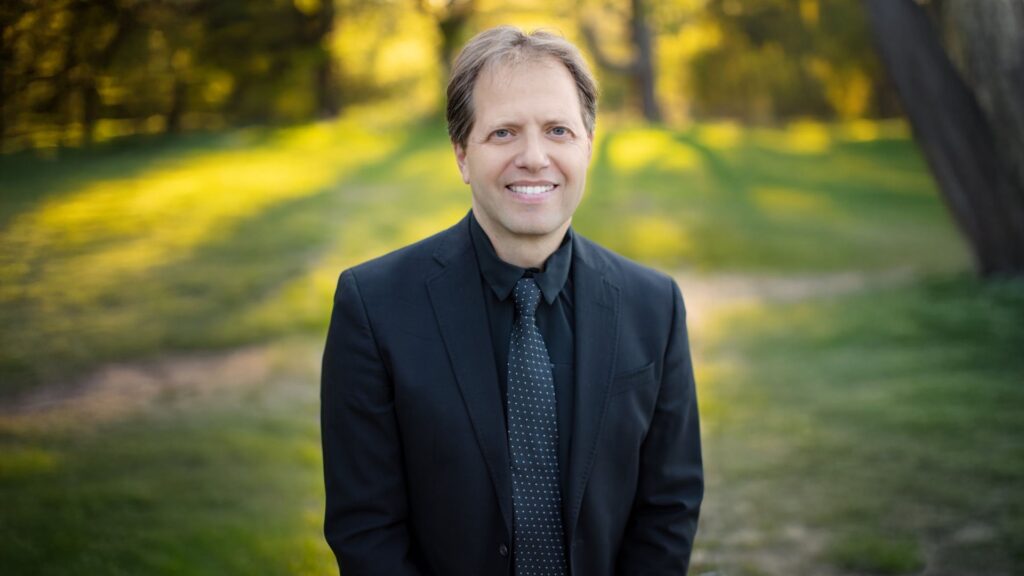
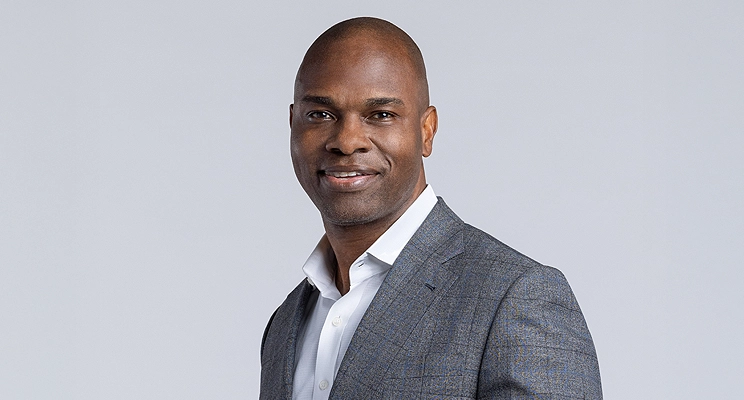
Andrez Carberry, CHRO of Phillips 66, shared timely insights with The ExCo Group‘s David Reimer and Adam Bryant on moving beyond simply thinking about how to leverage AI and instead stepping back to ask what’s possible with it, emphasizing the importance of operating with clarity around strategy, vision, and purpose, and accepting that uncertainty is the new norm.
Reimer: What are two or three big issues that are top-of-mind for you these days?
Carberry: AI, company vision, and talent/leadership development are top of mind. I don’t think you can have a conversation with an HR professional or business person these days without discussing AI. How impactful will it be? How much disruption will it create? How can you leverage it for your organization?
Within my function and the broader organization, we talk about going beyond thinking about how you can leverage AI into your work processes. Instead, it’s about taking a step back and asking what’s possible with AI. How would I design back vs just for today, and how would I build this in a way that maximizes impact?
If you focus on how you can be impactful by leveraging AI, that helps you steer clear of a common employee concern. When you talk about efficiency, that often creates uncertainty and maybe discomfort in the organization, because some people immediately think you’re talking about headcount reductions. But when you talk about how you can leverage this to be more impactful, and help employees unlock value, then it’s more of an empowering conversation.
Another big topic is that, given the ever-evolving global landscape, it’s critical that companies operate with clarity in terms of strategy, vision and purpose. To meet their strategic imperatives, companies need to create a framework that the entire organization can operate within, because people can move faster when you do that. They’re not always asking for permission because you’ve created the framework and the foundation from which they can operate. As stewards of the culture, HR professionals have a somewhat outsized role to play in that respect.
Bryant: How do you think about what good leadership looks like these days? What are the leadership muscles that we’re going to need to navigate a future that we can’t clearly see right now?
Carberry: Our approach has been, and will continue to be, that uncertainty is the new norm. We really need to develop leaders with an enterprise mindset who are comfortable navigating uncertainty and ambiguity. They understand that a critical part of their role is to provide clarity for their organization and their teams, connecting the dots, and then adjusting as necessary.
We’re also encouraging and developing within our leaders a better understanding of how to leverage teams—that means inspiring, engaging, influencing, and driving impact through others, rather than being the expert who dives into work at a granular level.
We need senior leaders to be focused on the big, macro issues that are important for driving our strategy, and leading through the change. That requires senior leaders to focus on removing barriers, empowering, developing, and trusting their teams to run day-to-day operations with meaningful accountability metrics.
If you’re not clear on your expectations of leaders, you can hamstring your organization, because leaders might then be doing the work that should be the responsibility of their teams. Over my career, I have seen how that can limit organizational health.
Reimer: What is your playbook for influencing change across the organization?
Carberry: You can’t take yourself too seriously in these roles. You can’t work toward perfection. We don’t have all the answers but we make informed decisions to deliver on the company strategy. We keep our work connected to the strategy, we are clear at the outset to communicate the “why,” are honest that we won’t be 100 percent right, and we will need to evolve as we go along. That approach demonstrates what we need from all our leaders, which is flexibility, adaptability and self-awareness to say that we don’t know everything, but we pursue excellence.
If you always connect what you do to how it can help enable and drive the strategy, then any shift is more tethered and impactful. It helps the organization recognize that we’re not doing HR for HR sake, but that we are delivering initiatives that address a business and/or cultural need, are easy to understand, and are impactful.
Bryant: What is it about your background that sets you up to thrive in a role like this, with so many new demands and so much uncertainty?
Carberry: I fundamentally start with respect. I grew up in a family of civil servants, who were always thinking about others and how they can help. There was always this sense in our family of being about more than yourself, contributing and being impactful. I also grew up in the church, where I learned about doing unto others as you would have done unto you. In corporate parlance, it means treating people how you want to be treated.
If you show people respect, treat them how you would want to be treated, that builds trust. It creates an environment where people feel seen, with a sense of psychological safety, which will help them do their best work and make the right decisions.
My background as a litigator/trial attorney has also helped. I learned that it’s important to seek to understand, and that’s a bit different from listening. When you’re seeking to understand, you’re truly in a space of learning. People feel that and respond to that in kind, and you’re able to gain true insights as to what the opportunities are.
That helps you become a better person, leader, and teammate. I also learned the importance of storytelling. It’s a skill that’s often overlooked, but is critical in how we inspire, influence, and foster a sense of excitement in the future among your stakeholders.
Reimer: When you’ve mentored and coached senior leaders over your career, are there themes that come up more often than others?
Carberry: I often tell people, be yourself, be human, be approachable, and demonstrate empathy. Sometimes executives develop corporate personas as they move up. They want to demonstrate and bring this aura with them, which I understand. But it’s quite easy to see through that veneer.
People follow leaders, not robots. If you are a leader who people connect with—they know how you make decisions and what matters to you—they will follow you. So I tell people to be the best version of yourself, and then have the self-awareness so that you can be coached, adjust, and adapt.
Another common topic is team dynamics. Leaders tend to wait too long to make the right decisions with respect to their teams. And as a leader, you’re only going to go as far as your team takes you. If you don’t surround yourself with people with the right capabilities, then you’re likely to be inhibited from reaching your true potential and the aspiration of either yourself or the function. Your ability to put together the right team, which is not necessarily a homogenous team, is an important signal to the rest of the function and business about how you intend to lead and what you intend to deliver.
Bryant: Are there other ways that your upbringing shaped your leadership style, beyond what you’ve already shared?
Carberry: I was very blessed and fortunate to have parents and a family—with my maternal grandmother, in particular—who had a vision for my life that I didn’t see. She was very clear about the idea that where you start is not where you finish.
I’m very mindful, when I meet people, not to assess people for where they are, but to be curious about who they are. In doing so, you can unlock a great degree of potential and meaningful experiences and insights. Growing up in humble environments—where you may not always be what is expected when you walk into a room—you are mindful about identifying potential, sometimes in the not-so-obvious places and providing the opportunity to perform and demonstrate what they can bring to the table.
I’ve had the good fortune of great mentors and people who have invested in me and provided the opportunity to learn and be impactful. I am called to do the same for others, as all leaders are.
Recent