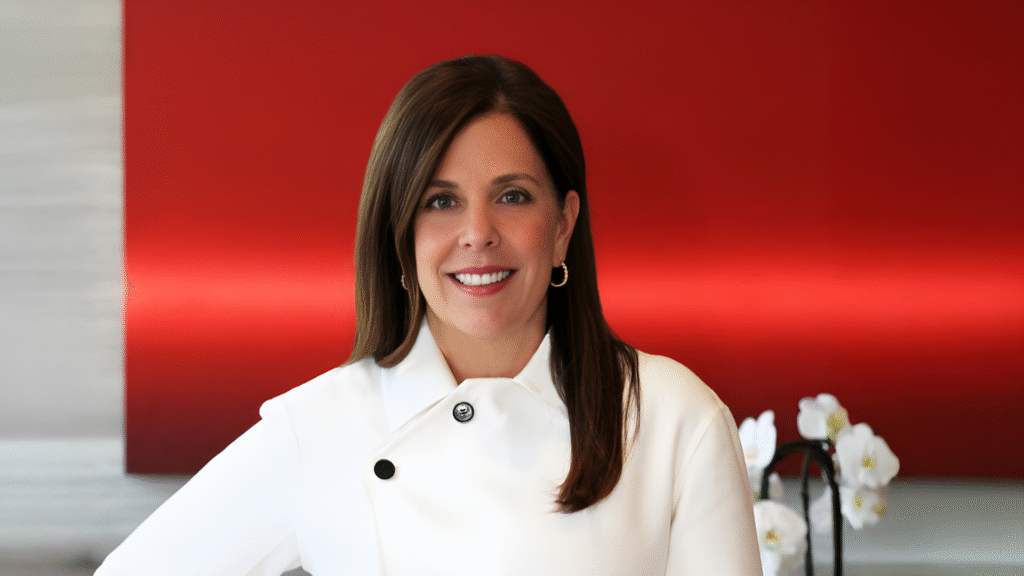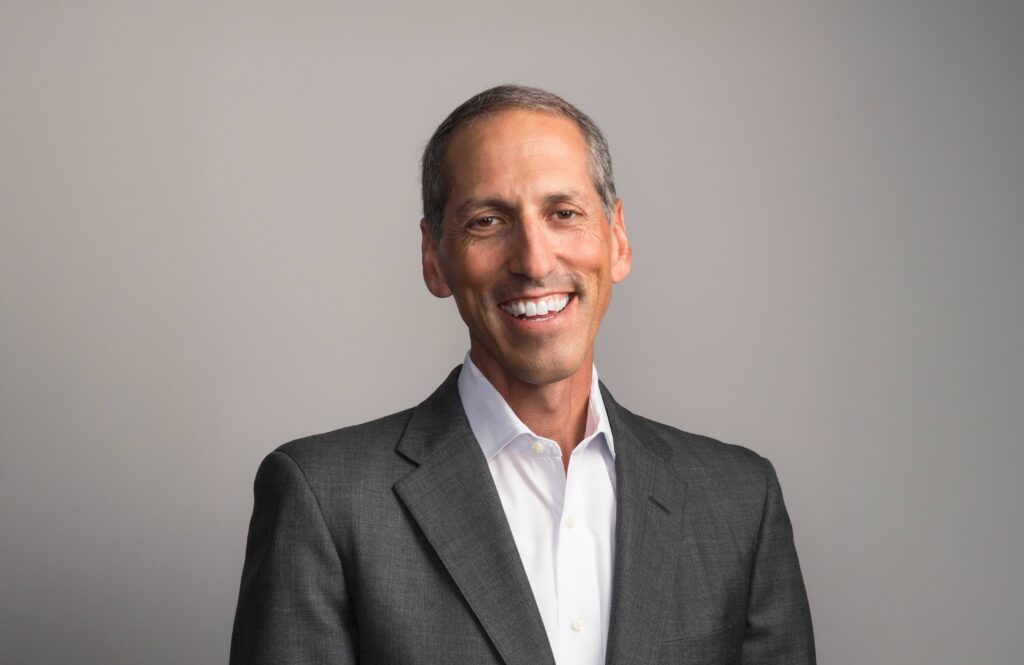

Samantha Hammock, CHRO at Verizon, shared her key leadership lessons on workforce management with Adam Bryant, Senior Managing Director and Partner at The ExCo Group, and David Reimer, CEO of The ExCo Group, in this Strategic CHRO interview.
Reimer: If you were asked to build an agenda for an HR conference nine months from now, what issues would you include?
Hammock: AI is an obvious one, but there are other key topics hitting the headlines today, including employee engagement and office space, that are still going to be with us nine months from now. I like to stay away from the term “return to office” because I think it’s the wrong framework.
The issue is more nuanced—it’s about engagement and the culture your firm is trying to build to drive results. There’s no one right answer. It truly depends on the company, your operating model, and your critical capabilities and strategic imperatives.
I also think HR needs to shift away from saying “employees are our greatest asset” to talking more about them as our greatest investment. How do you nurture that investment to grow, and how does it provide returns for you?
Finally, a big topic on the horizon is the massive impact the employee experience has on the customer experience. We’re going to see tighter correlations between investments in HR and how that translates to the employee experience and the payoff to improving CX.
Bryant: Leaders are often expected to weigh in on every topic in the news these days. How do you navigate that challenge?
Hammock: It’s not just that the line has become blurry about what you should talk about and not talk about. The line is gone. As employers, we have entire workforces that we’re caring for, and we have to think about how we provide them with the space and support they need to succeed.
I always talk about the role of HR in terms of four different pillars—to support the physical, emotional, and financial well-being of our employees, as well as their careers. With those first three, there is no line between personal and professional. And so, why do we think we can separate them and not talk about things when we know we have obligations to provide those things?
I get that these are not easy topics. And people may wonder, “Why are you pushing this? You can’t win.” But when have we ever “won?” I don’t think that’s the goal. You’re not going to make everyone happy. Name one thing we’ve ever done in HR that has made everyone happy. It doesn’t exist. But we can care for people, and if we’re going to advocate for anything, shouldn’t we be advocating for humanity and human kindness? That doesn’t mean I have to take a side.
Reimer: We are seeing more headlines that signal the increasing power of, and interest in, organized labor. What are the implications of that for HR?
Hammock: That movement is going to continue to escalate. If you go back to the original intent of organizing and what people are after, it’s not a bad thing. And there are some countries, by the way, that really got it right. The way in which we respond as employers is going to be critical.
What does everyone want? They’re after equity, fairness, and care. We can provide those things, but we have to be thoughtful about our messaging and how open and transparent we are with our employees. In previous decades, HR became too transactional, focused on process, and overly formal in our relationship with employees.
Bryant: What is it about your background that set you up to not only survive but even thrive in this environment of endless disruption?
Hammock: I’m the oldest of six, and in a big family, you have to learn how to operate as a team, and there is a lot of responsibility that comes with being the oldest. I also grew up in the Midwest with working-class parents. My father was a self-employed electrician, and my mom stayed home. I’ve had a full-time job since the age of 12, and I’ve never not had one since.
When I think about my childhood, hard work overruled everything. Grit was a non-negotiable. That’s why, when interviewing job candidates, I like to ask about the biggest challenges they’ve faced. When people have had to face and overcome real adversity, you see a different level of tenacity.
Reimer: What were other early influences that shaped you?
Hammock: I’m the first in my family to go to college. There was never a push from my parents to do that, and there was no help. One of my volleyball coaches asked me, “Are you going to apply to college?” I said no, and they said, “Yes, you are.”
I studied business and then went into accounting because I thought I was going to need money. There’s this notion of telling our kids to follow their passion, but I would have never taken that advice. I needed stability and certainty in my career, and accounting felt safe.
After I worked in accounting for a few years, I had a boss who pulled me aside and told me I should consider another line of work. It wasn’t about my performance, he said, then added: “It’s just that when you talk about literally anything other than your job, you light up. You’re like a whole different person.” I probably owe him my career because that conversation set me on a different course.
Bryant: What lessons did you take from one of your early jobs?
Hammock: I did corn detasseling from age 12 to 14. It’s a pretty rough job. You have to wake up at about 5:00 a.m., and you make very little money. But it was really important to me. I liked the structure of it. And I became a supervisor when I was 13. One of the lessons was that hard work is table stakes. Everyone in the field is working hard, so how do you differentiate yourself?
Reimer: What is the best lesson you took away from one of the worst managers you ever worked for?
Hammock: It’s a great question because I always say that I learned the most from the worst leaders because of the strength of the emotions you experience in those moments. Emotions create core memories. Emotions create reactions.
Early in my career, I had a bad manager who wouldn’t talk to his people. He was total command-and-control and never held one-on-ones or staff meetings. He would just push out orders and then berate people. He didn’t provide what people needed at work, including guidance, reassurance, and recognition. Because of that experience, I’m diligent about one-on-ones and staying connected with my team. Your shadow as a leader is important.
This interview on fairness, equity, and care in workforce management is a part of our leadership series, Strategic CHRO. Subscribe for more conversations with leaders who are transforming the world of HR.
Recent