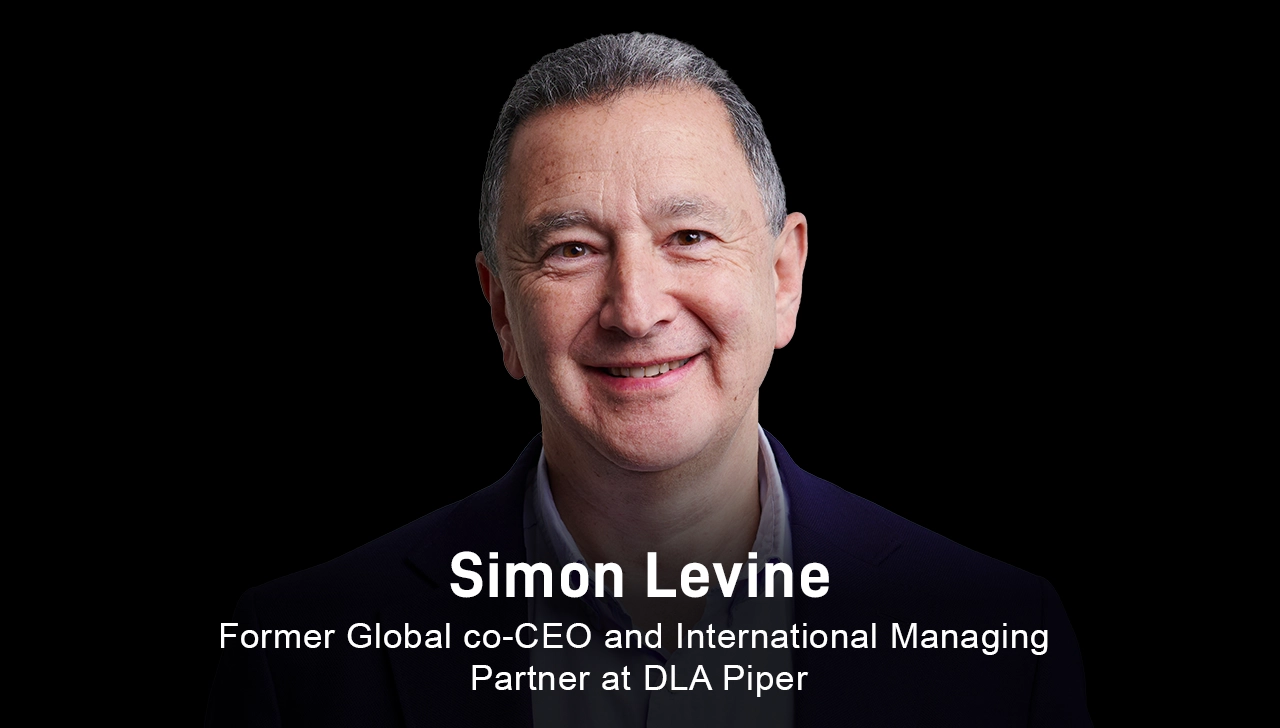
In this series, we explore some of the most important lessons and insights from our executive coaches and mentors.
Simon Levine, an executive coach and mentor at The ExCo Group and former Global co-CEO and International Managing Partner at DLA Piper, shares his key leadership lessons: talk less, listen more, never make promises you can’t keep, and embrace a healthy amount of self-doubt.
Click here for more ExCo insights.
KEY LEADERSHIP LESSONS
The first lesson I’ll mention, and I know this may sound very basic, is the importance of listening. I spent 35 years in law. I love lawyers. Lots of my friends are lawyers. I married a lawyer, and one of my kids is a lawyer. But lawyers are not great at listening, and the same is often true of senior leaders in any industry. And I’ve found over the years that you need to do less talking and do more listening. Because wherever people are in an organization, you can learn something from them.
I learned this myself when I was, in effect, a divisional head in a law firm. I went into my first meeting when I took on that role, and many people in the meeting were more senior than me, in both age and experience. I thought I’d run a great meeting, but a partner there, who was something of a mentor to me, put his arm around me after the meeting and said, “There’s a couple of points you might want to think about. One is that, when you’re head of the team, you don’t need to do all the talking. And second, you don’t need to remind people that you’re the head of the team, because it takes away from the point that you are the head. You’re there to listen to them.” That’s been a lesson that has lived with me for a long time.
Another lesson occurred further along my leadership journey, when I had moved into a bigger role with more responsibilities. I learned that you can never promise something to anyone—whether it’s in a 1:1 meeting or to your team—and not deliver on it. They might be asking for a promotion or a raise or something else. You might like them, and you want to please them, and so you raise their expectations by saying something like, “I’m going to try to get that for you.” That’s the worst thing you can do if the answer is going to be no.
“You can never promise something to anyone—and not deliver on it. I realized over time that I was better off being honest at the beginning. It’s about managing expectations.”
If you just say no at the outset, people will believe you are being honest and authentic. They may not love the fact that you’ve said no. But they’ll like it more than if you pretend you might be able to deliver on something and then you can’t. I realized over time that I was better off being honest at the beginning. It’s about managing expectations. Being a leader is, to some extent, a bit of an ego trip. Everyone wants to be liked, but you’ve got to get rid of that narcissistic tendency that everyone has, because that’s not what leadership is about.
WHEN I COACH CLIENTS, WE OFTEN TALK ABOUT…
One issue that comes up often is imposter syndrome. Most people who are in leadership positions of any kind can feel that they don’t know what they are doing. The important thing is to help people understand that this is a common thing to believe. There’s nothing to be ashamed about, and there’s nothing to be worried about. In fact, I’d almost be more worried if somebody thinks that they are fabulous and that they don’t do anything wrong. Having some self-doubt is healthy.
So I spend a lot of time with people trying to get them to understand imposter syndrome is natural, and to address it head-on and embrace it, see the positives in it, learn from it, and overcome it. It’s a bit like the fear of public speaking, or anything else. You can overcome those things with practice and the right psychological approach to them.
The second topic that comes up often is about how to have difficult conversations—how do you say something in a way that people will understand and embrace it and not be offended by it? Everyone has to develop their own approach. I spend a lot of time helping people think through how to strategically handle the conversation. One of my approaches is to ask people at the end of the meeting to repeat back to me what they’ve heard. Often they’ll only repeat what they perceive as the negative part of the message I’ve just conveyed to them. And that gives me an opportunity to correct that and get them to the right place.
Recent