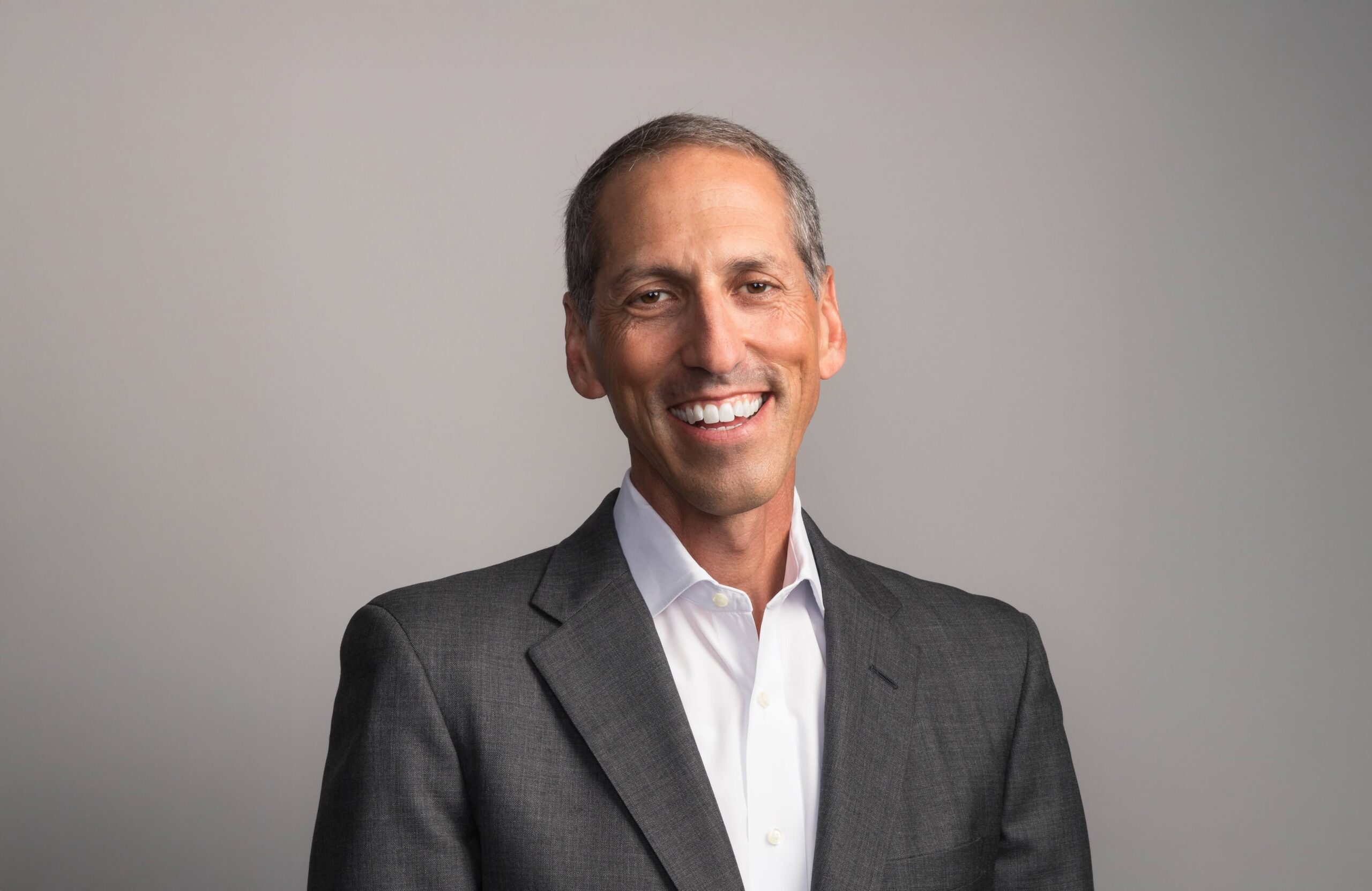
Dave Katz, President and Chief Operating Officer at Coca-Cola Consolidated, shares his leadership insights with Adam Bryant. In this conversation, Katz discusses building teams that collaborate rather than operate as hub-and-spoke models, how a cancer diagnosis at 21 gave him perspective on perfectionism and worry, and why all workplace frustration stems from unmet expectations.
Q. What is key to your leadership style?
A. I love building teams, coaching teams, and the dynamics of getting the players to play well together. A lot of my early- to mid-career assignments were to go in and fix teams that weren’t working well.
Leadership inside a purposeful framework—one that provides a clear sense of your strategic direction—is a big deal for me. It creates a swimlane that we know we’re supposed to be in, and it helps us stay in the lane and say no to things that aren’t in it.
And my leadership style day-to-day is about consistency, and the idea that we’re going to do what we say we’re going to do. I don’t want to spend much time talking about things that are outside our purpose and our goals. My direct reports also know to show up on time for our meetings and that we’ll end on time.
Q. How do you make sure your teams operate like true teams?
A. Each team has its own dynamic, but the most common situation I’ve encountered is that teams often operate like a hub and spoke. So you’re the general manager; you’ve got people running different functions, and everything comes to you as the clearinghouse to make decisions.
I developed a simple rule that everyone knows about me—I don’t want to hear about an issue until the team has played it out among themselves. So don’t come to me and say you need this from supply chain, for example, if you haven’t talked to the supply chain person already. You need to talk to your teammate first before coming to me.
If people align on a decision themselves, they know that I’m not going to debate the decision. And that’s always been my approach. You try to work it out, and then come to me if you can’t work it out. I have no problem making the call myself, but you have to know at that point that you’ve lost the right to make the decision.
Q. How did that become important to you?
A. I worked on several teams early in my career where the leader was a hub-and-spoke leader. And those environments are frustrating because you don’t have a sense of ownership in the decision. People bring their data points to the boss, who then decides without all the context.
I had a boss at one point who everybody knew how to manage—that if you were the last person to talk to him about an issue, you were going to win the battle. Everyone wanted to be the last one in his office, because that’s where the decision was going to land.
As I moved up and managed more teams myself, I realized that if I can get people working together, they start to empathize with each other, and they start to understand each other’s worlds.
Q. What were early influences that shaped who you are today?
A. I was born in Chicago and moved to Atlanta when I was six. We were a lower-middle-class family, and my parents had super high expectations of my brother and me. I had a poster in my room that said, “Anything worth doing is worth doing well.”
My childhood was marked by perfectionism. I was a 4.0 student all the way through high school and college. I swam from age six through my freshman year of college. That was my sport, and I didn’t have time for much beyond academics and swimming.
And then I was diagnosed with Hodgkin’s disease—a lymph cancer—a week before my 21st birthday. And that, of course, had a profound impact on me. The ugly side of the perfectionism coin for most perfectionists is worrying—they often go hand-in-hand.
Up until that point, I was a pretty major worrier, but the cancer diagnosis did give me perspective and helped me understand that there are more important things than getting an A on the test I had to take next week. It gave me perspective not to get too torqued up about the little stuff.
Q. How do you hire? What qualities do you look for, and what questions do you ask in job interviews?
A. Early in my career, for more than half the jobs I did, I was the first person to have that job. There would be something happening around me that nobody else was doing, so I’d start learning about it and doing it. And then someone would say, “Hey Dave, that’s a really good job. You should be in that job.” So I’m always looking for people like that. I look for people who are doing a bit more than their current job.
In the interview itself, I will also ask about times when the person had an issue with another function in their company. What was the issue? What did you do about it? I’m listening for them to say that there was a ball on the ground, and they picked it up and ran with it. Or they set up a lunch with a colleague to figure out how they could pick up the ball and run with it together as a team.
Q. When you give coaching and mentoring advice to senior executives, what themes come up often?
A. There’s a quote from one of my favorite pastors in a sermon about marriage that says all frustration is the result of unmet expectations. It’s pretty true in marriage, and I think sometimes it is even more true in the workplace.
I spend a lot of time mentoring on that theme, because when someone has an issue with a colleague, it’s usually an expectation issue. Often, my advice to them is to meet with the other person, share their expectations, and decide what can be done.
Another theme that comes up a lot is talking to people about how others are experiencing them. At these levels, everybody is a technical genius, and they can do their jobs. They’re smart and hard-working. But their blind spot is that they haven’t spent enough time thinking about how their actions are being received by others.
Q. What do you consider to be the hardest part of leadership?
A. Leadership can be lonely. Earlier in your career, you’re always working with peers, and you can commiserate about your boss, and you work together to solve problems. So you have your group for most of your career, and then you suddenly don’t when you become the leader. That’s the lonely part. You’re expected to make decisions and bear the weight of those decisions. You own it.
Recent