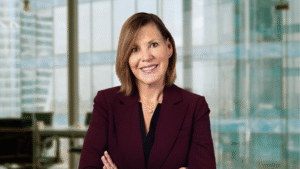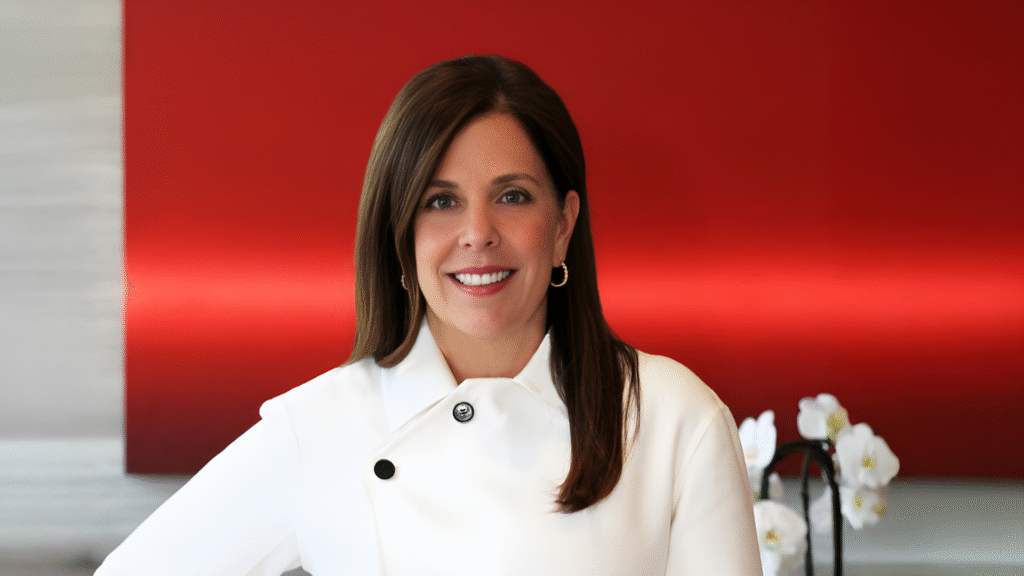
Penny Herscher, a former technology CEO and veteran director who chairs multiple boards including, Lumentum and Penguin Solutions, shares her key insights in this Director’s Chair conversation led by Adam Bryant and David Reimer. She discusses the unpredictability of eventual succession, prioritization, and anticipating risks.
Reimer: As a board chair, you’ve been involved in several CEO successions. What do you know now that you perhaps didn’t know or fully appreciate before?
Herscher: It’s all about the unexpected. I had always assumed it would be a well-planned process. What I’ve learned is that even when you start a year or two in advance to plan it out, things never go quite the way you expect.
Markets change the requirements of the CEO, or the CEO’s ability to solve the problems that he or she is facing changes, or it becomes evident that they actually don’t have the skills that you thought they had.
So the biggest lesson for me is the importance of having CEO-succession discussions on a continuous basis. It’s not something you discuss only when the business takes a downturn, or when you feel that you don’t have the right CEO, or when the CEO says that they want to retire. You need to be discussing it continuously, because the process is fraught with the unexpected.
Bryant: Many CEOs don’t even want to have the conversation about succession because they have no intention of stepping down anytime soon.
Herscher: Yes, but I’m very direct about the fact that everyone is replaceable, and any one of us, at any given moment, may have a life event that prevents us from doing the job. So I use a couple of tactics. One is to say to the CEO, “Let’s say you win the lottery, or you’re hit by a bus, or you have a heart attack. Who are the five people you think I should call to possibly replace you and why?”
I’ve found that’s very helpful because it’s very pragmatic. Something happens where the CEO can’t do the job. I’m the board chair. Who should I call? Who do you know? Who on your team is ready? What do we need to do to get someone ready? Or is nobody on the team really ready, in which case tell me the five people outside the company who could replace you.
I’ve done this twice now, and it’s a very interesting discussion. The CEO can be a bit uncomfortable at first. But if you have a level of trust with your CEO, they realize that you’re trying to make sure the company is protected in the case of the eventuality. But you must have the discussion, because bad things can happen to anybody at any time.
I have a very personal viewpoint on this. I had a sudden cardiac arrest at 60 with no warning. So I’m harsh with people who think they are invincible. If you are CEO of a public company, it is irresponsible to say, “No, I don’t want to talk about it. I’m not going anywhere.” The board has a fiduciary responsibility to protect the shareholder from the unexpected.
Reimer: Given the general volatility of the world, how do you think about the right cadence and depth of the discussions about leadership talent in the organization?
Herscher: The annual cycle is pretty traditional, in which the CHRO leads a discussion about the talent below the C-suite. But at every single board meeting, I like to spend some informal time with the CEO to ask them how their team is doing, particularly who is emerging as a potential successor.
It’s important for retention reasons, too. Because if someone is ready to step into the CEO role now, then you risk losing them unless you do something to take care of them. So it should be an ongoing dialogue—particularly between the chair and the CEO—about the team and the high performers coming up.
Bryant: How has the nature of risk evolved?
Herscher: Many of the fundamental risks remain, but what has changed is the level of transparency and speed with which information travels. Think of the CEO who was caught on camera at the Coldplay concert, and how it went viral in less than an hour. Cyberattacks can happen so suddenly now that you have to have the tabletop exercise beforehand so that you’re not scrambling to figure out a plan for how to respond.
You have to try to anticipate the risks you need to prepare for. What are the top three risks that the company faces? Does the board feel the company is prepared for those top risks?
Reimer: What are the X factors you’re looking for in CEO candidates?
Herscher: A significant factor for me is whether the CEO deeply respects the need to build a team that is smarter and more knowledgeable than he or she is—they understand that the strength of a company comes from the bench strength below the CEO.
Some CEOs truly understand that. Their focus is on getting the right people in the room and driving the right conversation to lead to the right decision. It doesn’t mean that they delegate all the decisions. It means that they are hyper-aware that the strength of the team is the strength of the company. That takes confidence and humility.
There are many CEOs who want to be the smartest guy in the room. And my observation, having served on boards for 20 years, is that the best ones are not looking to be the smartest guy in the room. They might be the smartest, but that’s not their focus. They ask, do I have the smartest people in the room with me for the problem we’re trying to solve? I really look for that, and it outweighs everything else for me. The quality of the team and the way they work together with the CEO really moves the needle.
Bryant: To be an effective board chair requires being able to have those frank and sometimes difficult conversations. Where does that come from for you?
Herscher: My father would say that I’ve always had it. But I also learned a lot growing up professionally in Silicon Valley and always being an outlier. When you’re always an outlier, you do get to observe a lot and develop an appreciation for the subtle dynamics in a boardroom.
But these are also challenges that I care about. It’s one reason why I’ve set up a small entity called “The Chairs Circle” with Karen DeGolia, who is a board chair herself, to host retreats for board chairs. My goal is to create an environment for peer-to-peer learning among the chairs.
Recent