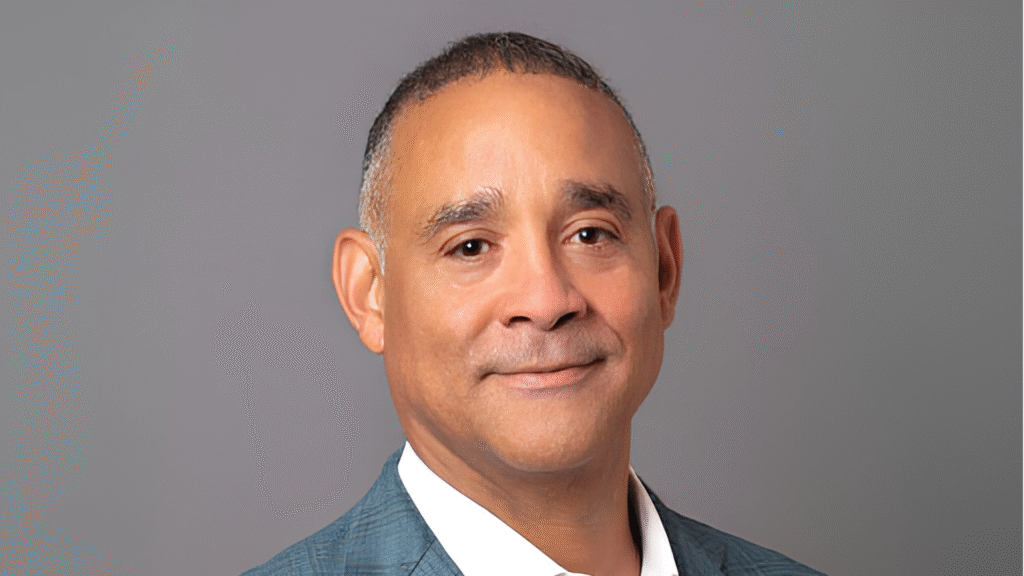

Paul Norman, MTN Group’s Chief Human Resources Officer, shares his key leadership lessons in this Strategic CHRO interview with Adam Bryant of The ExCo Group and World 50 Group in this “Passing the Baton” series.
Q. What are the X-Factor skills and capabilities that the next generation of CHROs is going to need?
A. This is true for all C-suite roles, but you have to have a deep sense of self—know yourself really well and understand how you show up and how you lead. This is not new, but as the world has evolved, there is a greater emphasis on being human as a leader. A role of CHROs is to create a more humane space in their organization, but you can’t do that if you are not yourself very aware. So this the old concept of self-awareness as a leader has never been more important.
The second thing is that, as you consider the global, social, economic, and political environment that we are in, it’s even more important for the CHRO to be able to make sense of that for your organization and for your people. How do you build a sense of purpose, safety, and vision in this chaos and uncertainty?
How do you create an environment that enables your organization to traverse these external factors while still delivering on its strategy? It’s not only the CHRO’s responsibility, but we play a key role in creating a sense of belonging and purpose.
Lastly, how are we preparing our organization for a future in which AI and generative AI will play an enormous role? The half-life of skills is going to grow shorter and shorter. The CHRO has to be focused on creating an environment where people are able to build skills at the rate we will need. How do you set up that infrastructure? How do you make sure that skills remain relevant as the organization and world are moving?
Q. It takes a certain background and wiring to be comfortable amid all this ambiguity. Where does that come from for you?
A. I’m based in South Africa and I grew up in the apartheid era of South Africa. That was in part about coming to grips with your sense of belonging and the importance of understanding diversity, equity, inclusion, and all the issues we grappled with at the time. There was this sense that you have to really work hard and you have to do a lot to make a difference. You had to carry a lot of people with you because you were all in this together.
And so I ended up in various situations throughout my early life where I was either part of transforming things or at the precipice of pushing change. And so that built into me a sense that you have to make things happen. You have to drive transformation. Because of that, I am comfortable with lots of change and ambiguity, and I try to make sense of that for those around me. That’s one of the critical roles that CHROs have to play today and tomorrow.
Q. What are the dos and don’ts you would share with a CHRO who is stepping into the role for the first time?
A. One, be careful not to lose yourself in the role. It’s the same advice I give to CEOs. When you take on a big role like this, you come in with lots of dreams and aspirations. You come in with your sense of self intact. But then you can get seduced by the role and you start believing your PR because everybody is reacting to your position, not you. And if you get lost in that journey, you won’t find yourself down the road. So find a way to stay grounded.
Second, you have to be very clear about the values of your organization—what it stands for, its purpose, and the impact it wants to make. Then make sure that the key decisions and behaviors from leadership are true to that. That’s difficult because top leaders come and go, and each person wants to put their own slightly different stamp on the company. But you have to hold that center. It’s important that you are clear about your role, and that you don’t become simply the person who does the CEO’s bidding.
Third, you have create an environment where every single employee has a sense of belonging. They have to feel that this is their company. They have to feel this equity. There’s a sense that they can live out their purpose there.
Q. How do you complete the sentence, “The hardest part of leadership is…?”
A. Being able to remain true to yourself and still make an impact in the world. We make a lot of decisions, and many of them have a big impact on many people. Sometimes that means 1,000 people have to lose their jobs. It’s a part of the job, but you always have to remember that there are real people behind those decisions, not just numbers.
Q. Music has been a big part of your life. Can you share a story about how it’s had an impact?
A. In the early ‘90s, I was a member of a large church in Johannesburg that was part of the resistance movement. It actually was Nelson Mandela’s church when he came out of jail. Part of my job was, through music, to transform the church, because it was traditionally a white church.
With the changes in the country, a lot of Black people started coming to the church—not just from South Africa, but also from the rest of the continent, because the borders were starting to open up and people were coming down. So we ended up with French-speaking Africans and Portuguese-speaking Africans. Music is an important part of who we are, and it’s one of those things that, like sports, transcends a lot of boundaries and differences.
Recent