
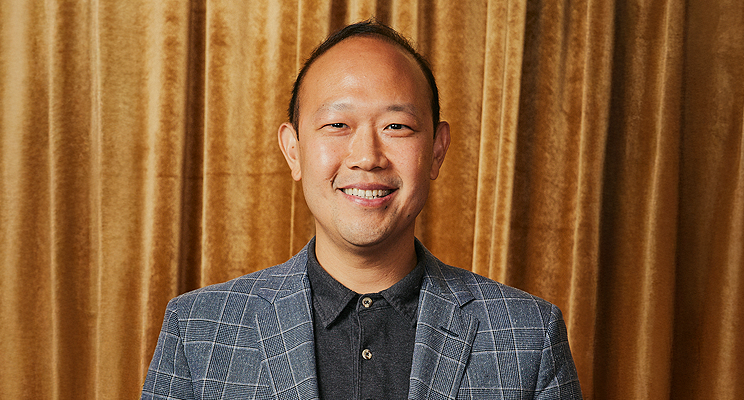
Chieh Huang, board director at Forbes and McLaren Racing, shares timely insights with The ExCo Group‘s David Reimer and Adam Bryant on AI in corporate governance, drawing the line between board and management, the importance of CEO receptivity to learning, and preparing boards for the future of work.
Reimer: Are there one or two topics that boards should be focusing on more than they are now?
Huang: I’m from the technology world, so it’s not surprising that I’ll talk about artificial intelligence. I think it will profoundly change business, no matter what industry you’re in—not necessarily in a negative way, and potentially in a positive way. Overall, AI is probably high on the hype cycle right now, and we’ll have those moments when it will fall down back to Earth. But just like for the internet, AI will be a thing that cannot be ignored.
One issue that is perhaps not being discussed as much as it should be is, where do you draw the line between board and management when it comes to conversations about AI? Because things are moving so fast on that front, more discussion is warranted around clarifying what a board-level discussion is about the role of AI.
Bryant: So what are the specific questions that a board should be asking itself?
Huang: I think there are two salient questions. One is, has it affected our business to date, and what are the actual, practical effects of it? The answer could be zero. The second question is, if we assume that AI will have the same profound effects as the internet did, what will that mean for our company in terms of impact? Those two simple questions could lead to some profound conversations.
Reimer: There’s a big focus right now on the role that AI can play in terms of productivity and efficiency. But there’s a second component to that, which is how to leverage the additional bandwidth in a company that, in theory, should be created by AI. How do you think about that?
Huang: In my last company, we did e-commerce. So we were very advanced in our thinking around automation and trying to automate as many processes as possible in the fulfillment center. What people often don’t realize is that when you adopt these new technologies, you may take one, two, or even five steps back before you take ten steps forward.
We’re not going to live in a world where we don’t need humans at the controls. Or if that is the future, then it is still a long way off. Humans need to be in the loop to help figure out how AI and automation can augment what they do versus totally replacing them.
A lot of companies pull the plug on AI initiatives when they realize they still have the same number of people and productivity. At that point, they often say, “It’s not working for us,” and they pull the plug because they think the project didn’t work. But if you get through that part of the curve, you may see some good longer-term results.
Bryant: As you read and listen to all that’s being written and said about AI, do you find yourself thinking that people are missing some nuance in the conversation?
Huang: I’m glad I lived through the whole internet hype cycle, because there are a lot of similarities to the conversation now about AI. There were times when people said the internet was dead, and other times when they said the internet was going to change the world. It’s the same thing we’re seeing now.
I can see a world where you’re right and wrong at the same time. It’s just a question of how many years you will be right before you’re wrong, and vice versa. I do believe we’re high on the hype cycle right now. We’re going to fall back to earth. Folks are going to proclaim that AI was overhyped and it’s dead. And then in 10 years, we’re going to look around and there’s going to be so much AI pervading our life that we’ll say, “Those folks were actually right and wrong, depending on the time when you when you called it.”
Reimer: You are a serial entrepreneur, in addition to your work on boards. What were early influences that built that muscle for you?
Huang: My earliest experience with being an entrepreneur was doing garage sales for my parents as part of cleaning out their basement. And I later realized that you could go to food wholesalers and buy bulk candy and then sell it for a good markup at the basketball court.
I also felt the entrepreneurial bug when I was an attorney. Even after all my work was done for the day, I would often stay a bit longer and do my own research on the company whose legal work I was handling. How did those founders start the company? How did they get to where they are? Maybe it was the early morning hours that made me delirious, but I started to think that maybe I could do this, too.
Bryant: What are your top dos and don’ts for first-time directors?
Huang: One is, don’t cross the line between management and being a director. If they’re a first-time director, there’s a good chance that they’re still an active operator. You can just tell sometimes that they are chomping at the bit. But you definitely don’t cross the line. You have to respect that you’re no longer on the field when you’re in that role. You’re just a coach.
Also, first-time directors need to set their expectations that every board they join is going to be a working board. It’s not about just going to four meetings a year. It’s much more than that, and it’s not as easy as it sounds. So do expect a big workload.
Reimer: What is the most important X factor that you’re looking for in a CEO these days?
Huang: Receptivity to learning is a big one. On one hand, you don’t want to hire someone who’s learning on the job, especially if you’re hiring for a public company CEO. Sometimes, the playbook they built from their previous experiences will work well in the new situation.
But more often than not, there are so many nuances that the same playbook is not going to fit well in the new context. And so the receptivity to feedback is really important and nuanced. It’s a balance of confidence and being able to say “I don’t know.”
Bryant: What career advice do you share with kids these days, particularly about the best field of work to study? What expertise should they try to develop, given how fast the world is moving?
Huang: I would suggest learning systems design, whether from an engineering perspective or, frankly, for any field. I mentioned this earlier, but we are going to need humans at the controls and to provide input for designing systems for the foreseeable future. AI is going to play a big role, but humans still need to design how the robots should work together. That’s where I would put my money.
Recent









 English
 English (UK)