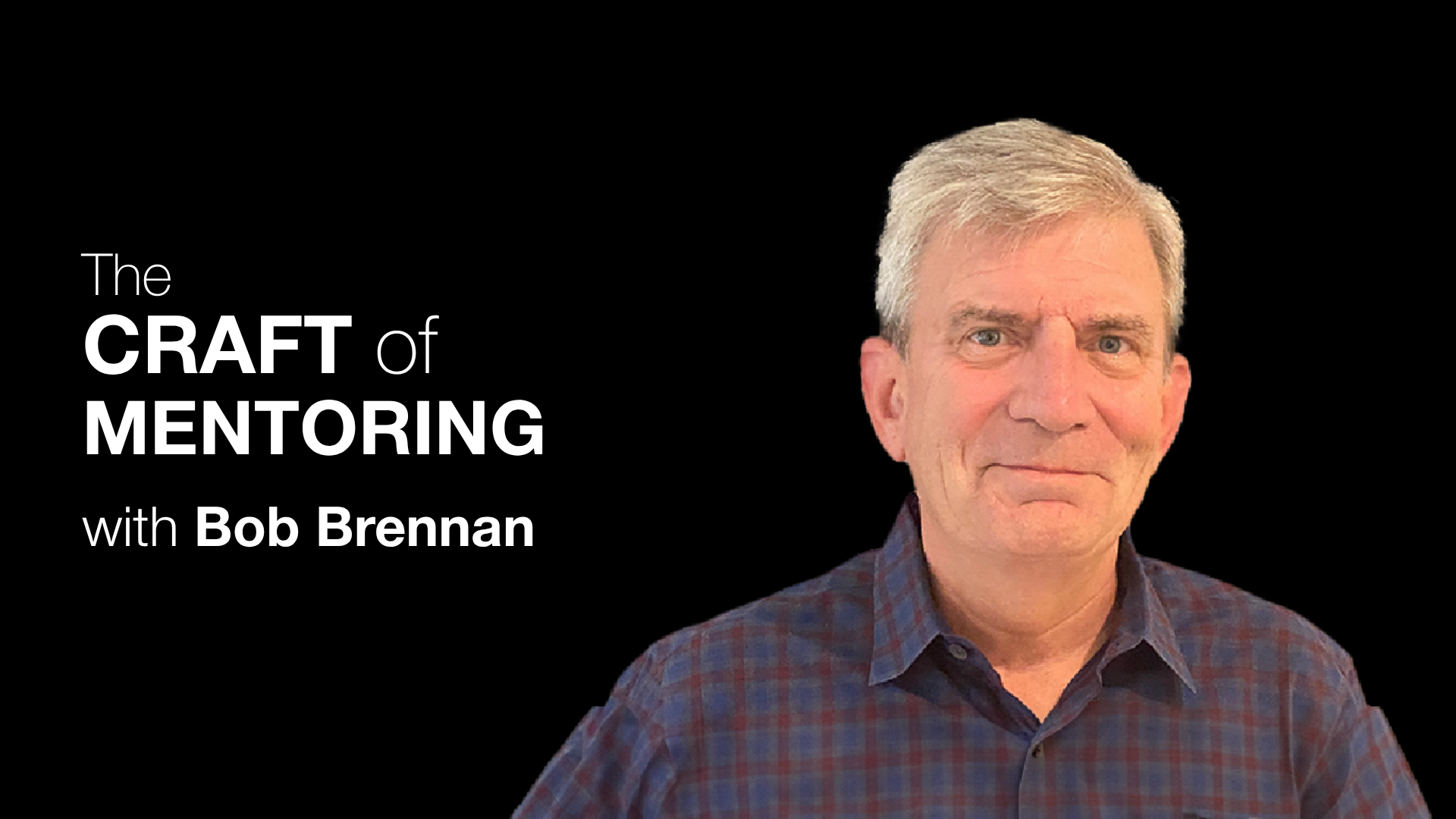
Bob Brennan, Board Director at Fairwinds, and a mentor and coach at The ExCo Group, shared sharp insights with Adam Bryant. Key themes include how trust enables honest feedback, why prioritization must align with calendars and spend, and the importance of driving defensiveness out of organizations to unlock peak performance.
Bryant: What do you consider to be the X factors of effective mentoring?
Brennan: One is getting my client to understand that my only job is to make them more effective. I also want to understand them personally, because they generally don’t have an avenue to talk about what’s distressing them, including issues that are beyond the four walls of their organization.
But the most important X Factor, to me, is to be able to deliver constructive feedback in a direct but non-threatening way. Because they know the only thing I’m committed to is making them better, they’re more likely to hear the feedback they need to hear, but others are not sharing with them.
When the trust is there, you can tell them that there is a gap between their intent and their impact, based on what we are hearing and seeing about their behavior. I also share with them what I’ve learned from all the mistakes I’ve made over my career. I’m very open about who I am.
Bryant: What frameworks do you use that typically lead to the greatest unlocks?
Brennan: I typically work with CEOs, and the question I often ask is, Are you being expansive about what’s possible with the enterprise while being precise about what’s important? You have to be precise on prioritization, and make sure there is congruence among your priorities, your calendar, your team’s calendar, and your operating spend.
A CFO of mine drove home the importance of that to me. I once said to him, “Let me tell you my strategy.” And he said, “Why don’t you send me your operating expenses, and I’ll tell you your strategy tomorrow.” When you create a clear set of routines that everyone can follow, the output of all that should be the creation of economic value.
Bryant: Is there a story you can share about a tough conversation you had to have with a client that ultimately landed well?
Brennan: I worked with a senior executive who saw his colleagues as rivals and competitors. I was trying to break him of that, and I eventually reminded him that the team he was on is more important than the team he leads.
I also told him that if he kept seeing the people he worked with on the leadership team as competitors, then he should probably just work somewhere else. Three months later, he came back to me and said, “You have no idea the impact that had on me.”
Bryant: What’s the best lesson you learned from one of your mentors over your career?
Brennan: My best mentors were the people who worked for me and would tell me what I needed to do to be more effective. They would walk into my office, hold up the mirror, and tell me that something I did or said didn’t land well. They felt deputized to close the gap between my performance and my potential. Those are the people who helped me the most.
Bryant: What is the wisest thing that you’ve ever read, heard, or said in the context of leadership?
Brennan: As a leader, there are a lot of positive motivations that you need to inspire in people in your organization. But the one that you have to suppress, and demonstrate through role-modeling, is the most primal motivation we all have, which is to defend. The goal is to get defensiveness out of your organization and focus on the competition so that you achieve, learn, and bond together.
Bryant: Are there new issues or themes that are coming up with your clients?
Brennan: The pattern I see across executives today is that they don’t allocate sufficient time for thinking, and they spend too much time in the busyness of a big corporation, with meeting after meeting after meeting after meeting. Then they go to dinner, go home, sleep, wake up, and do it all over again. You need to spend time thinking through what’s working and what you should be doing that you’re not.
Recent