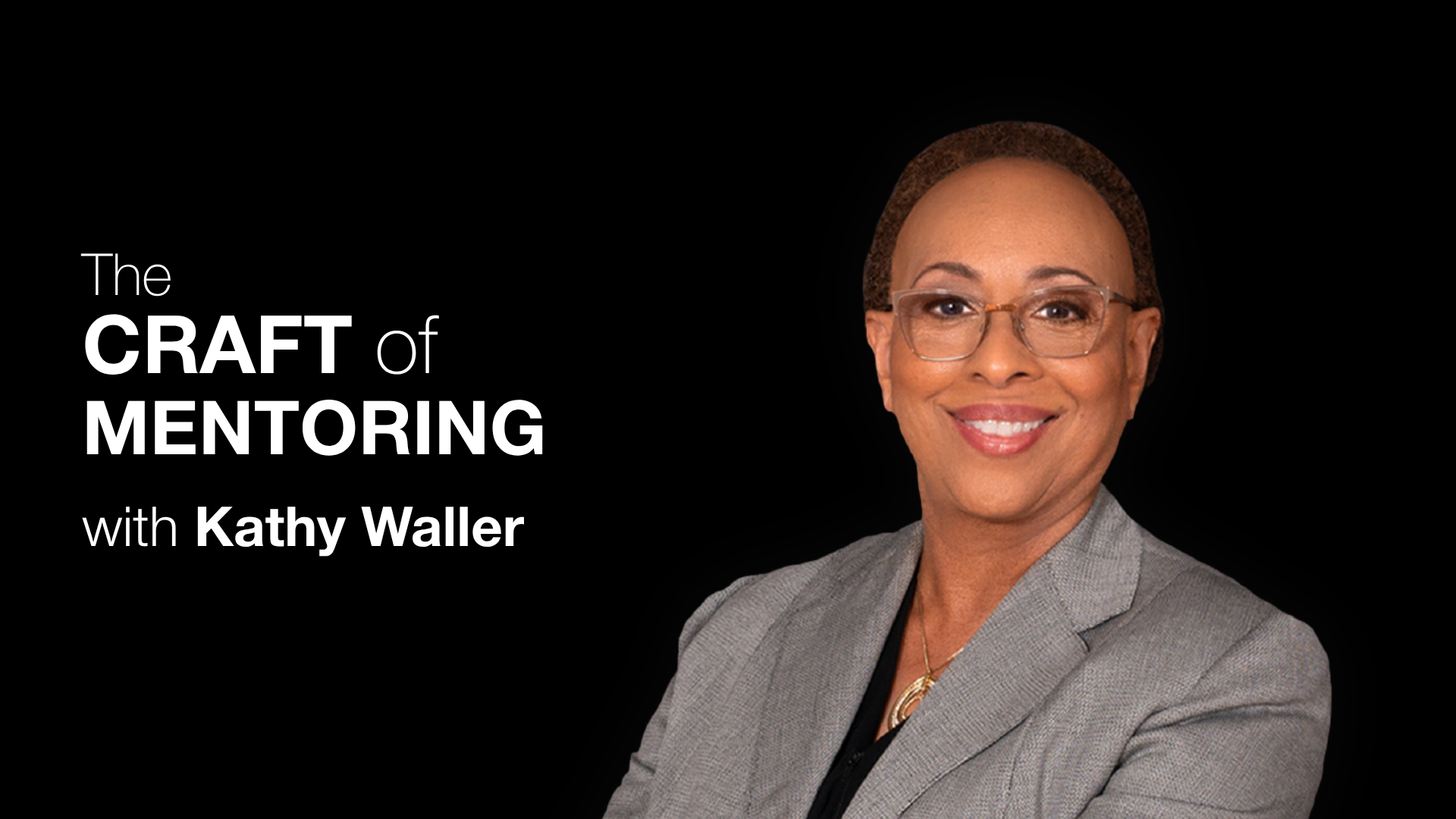
Kathy Waller, Board Member at Delta Air Lines Inc., and a mentor and coach at The ExCo Group, shared candid insights with Adam Bryant. Key themes include the power of trust and vulnerability in mentoring, how the lifeline exercise reveals life patterns, and why owning your own story is essential to authentic leadership.
Bryant: What is the secret sauce of mentoring for you?
Waller: It starts with trust, and that includes me making clear that everything my client says to me stays with me. My experience as a leader matters, too, because it has taught me that it’s okay to be vulnerable. One of the ways I can help my clients when we are discussing a particular issue is to share a mistake I made during my career that I’m trying to help them avoid. I also reassure them that mistakes are not life-changing—we all learn from them, and we move forward.
There’s nothing like doing something yourself and learning from first-hand experience. But it also helps when I can tell someone, “If you go in that direction, let me just give you a little warning about what could happen.”
Bryant: Are there particular tools or frameworks you use that lead to the greatest unlocks?
Waller: I like to use the lifeline exercise, in which people share the highs and lows of their lives, starting at a young age. It helps people see patterns in their lives, so that they understand how their past is impacting how they move forward. It’s very powerful, and it’s easy for them to see the patterns once they’re on paper. Otherwise, they may never think about it.
I also like to understand at a detailed level how my clients spend their time. I find that people generally believe that they use their time incredibly wisely, and that they’re doing everything they are supposed to be doing. But when you really break it down, they start to see how they might be wasting time in one area and how they should be spending more time in another area.
Bryant: Can you share a story about a particularly difficult conversation you had with a client that ultimately ended in a good place?
Waller: I had a client who believed that all the speaking he was doing at conferences—on behalf of his company and on behalf of other organizations he belonged to—was going to help his career. His company then started going through a major transformational shift, and his responsibilities included leading his part of the organization through that shift. But he was having trouble getting that done because he was spending so much time externally.
I had to have a tough conversation with him and tell him that his external speaking is not what his company needs from him right now. I also asked him if he had ever talked to the CEO about his external speaking and whether he valued that investment of time. It was a hard conversation, but it started with that exercise of going through his calendar to better understand how he was spending his time.
Bryant: What’s the best lesson you learned from one of your mentors?
Waller: When I was growing up, the first time I left home in Atlanta was to go to college. A mentor of mine gave me the advice that I should meet people where they are. I left the all-Black environment where I lived in Atlanta to go to Rochester, New York, where less than 5 percent of the students were Black. It was challenging because I encountered racism.
But my mentor taught me that people react from their own experience, and that what I perceive as something negative toward me may only be because they don’t know me or because they don’t know anybody like me. That advice was game-changing for me because I stopped taking things personally.
Sometimes you should, but it’s helpful to assume that people are not operating out of bad intent. And when you get to know the person and try to meet them where they are, your perspective totally changes. I now assume that the first impression I have of someone is just that, an impression, and then I get to know the person before I fully form an opinion about them.
Bryant: What is the wisest thing that you’ve ever read, heard, or said in the context of leadership?
Waller: Own your own story. Because if there’s a void in the knowledge or information that people have about us, they will fill the void themselves and make assumptions. If you don’t own your own story, including your mistakes and your wins, people will write that story for you and tell it for you, but in a way that doesn’t represent you. So you need to own your own story, the good and the bad, and you need to tell that story accurately and fairly.
Bryant: Are there new questions or issues that are coming up in your work with clients?
Waller: There are so many difficult societal issues right now, and some companies are choosing to respond to some and not to others. There was a time recently when many companies were talking all the time about issues, so people can naturally wonder why their employers are not responding now. Companies have so many different stakeholders, and they all think differently, and they’re all divided. So what is the best course for a company today?
Rather than judging their companies for not talking or fighting about certain issues, I advise people to put themselves in the shoes of their CEO. What’s the mission of the company? How do you stay true to that? You have a lot of stakeholders, and you have to protect the company on their behalf.
Yes, it can feel challenging to stay silent, but it can be more challenging if you speak up. That’s a hard place for some people right now, because there really isn’t a right answer. There’s probably a bad answer and a less bad answer. It’s not as simple as right and wrong anymore.
Recent