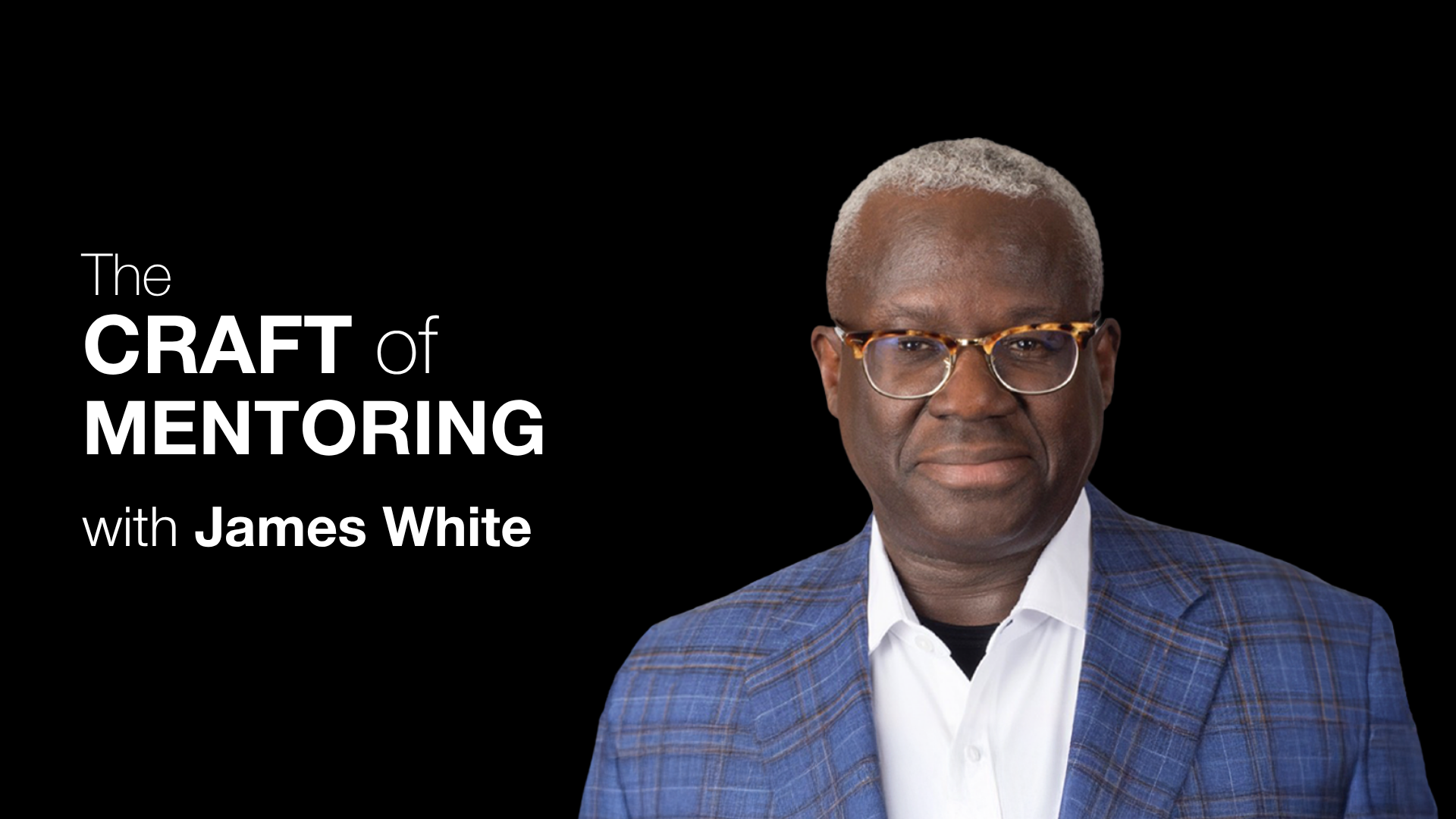
James D. White, Board Chair at The Honest Company (NASDAQ: HNST), and a mentor and coach at The ExCo Group, shared powerful insights with Adam Bryant. Key themes include the art of listening with heart to build trust, how structured frameworks like the lifeline exercise and future-back thinking unlock real breakthroughs, and the timeless leadership lesson that people don’t care how much you know until they know how much you care.
Bryant: What do you consider to be the secret sauce of effective mentoring?
White: The magic is in listening with heart. I demonstrate care, and I show that I am listening, which often includes playing back what I am hearing in a meaningful way. Trust is also built through shared vulnerability, and I will share my own stories and lessons at key moments in our discussions.
Bryant: Is there a tool or framework that you’ve found to be particularly effective for creating unlocks when you start working with somebody?
White: One is the lifeline exercise, in which people share the highs and lows of their lives, starting from a young age. I always share my own, as well, and that ends up being one of the more powerful unlocks. Because once I share and go deep on what I’ve experienced, it then gives permission to my client to do the same.
I also get a lot of insights from interviews with my clients’ stakeholders. In those conversations, I often ask for their “start, stop, and continue” feedback about my client. And I’ll add a fourth open-ended question about what advice they have for my client. Those questions always lead to a rich set of data about the themes that will be most helpful to know.
The third one is a “future-back” approach. We’ll pick a point three to five years in the future, and I’ll ask them to describe in some detail what they want their career and their life to look like. And then, given that, what actions do they need to take today to start down that path?
Bryant: Is there a story you can share a story about a difficult conversation you had to have with a client that ultimately ended in a good place?
White: The biggest one is when leaders have towering strengths and superpowers that, when overplayed, turn into fatal flaws. But change can be hard, because leaders, especially when they are under stress, often default to relying on their towering strength.
I will often pose the question, what would you be willing to invest in to realize the full potential that sits in front of you as you move into bigger roles? When you’re trying to change or make progress, you’ve got to be willing to invest in some way and make the trade-offs.
Bryant: What’s the best lesson you learned from one of your mentors?
White: There are a few. One is that mentoring is a gift with really no expectation. I had a gentleman who ended up being a mentor of mine for more than a decade. We talked each Sunday for an hour. We became personal friends, but he really had no expectation. He was investing in the future to be helpful to a promising leader, and he was such a good advocate. I’ve tried to do the same for many others over the years.
Bryant: What is the wisest thing you’ve ever read, heard, or said in the context of leadership?
White: One idea that I’ve shared often over the years is that people don’t care how much you know until they know how much you care. I learned that lesson when I had my first leadership role at age 24, when I was at Minute Maid. The six gentlemen who worked for me were a decade to 15 years older than me. So there was nothing I was going to teach these people about being in the juice-selling business.
I quickly learned that if I could understand their interests and what they knew, then I’d be able to leverage their interests. My interest was to create a high-performing team, but I had to show them that I was trustworthy and that I could help them realize their goals for their lives and their families.
I built different relationships with each of them. You have to lead people individually, and I was able to find ways to tap into their discretionary effort. That’s built on trust.
Recent