
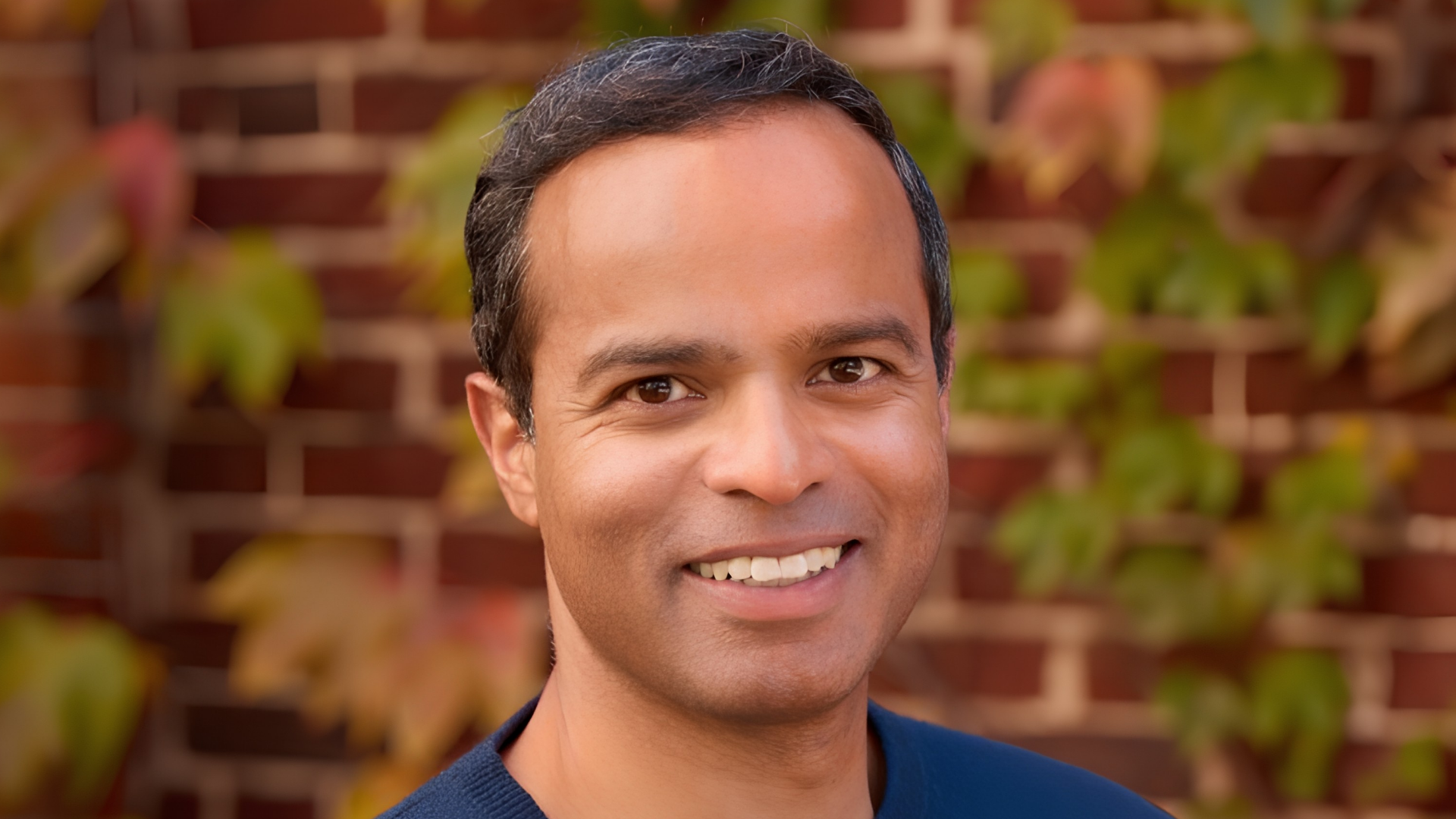
Bhavesh Dayalji, Chief AI Officer of S&P Global and CEO of Kensho Technologies, shared timely insights with David Reimer and Adam Bryant. Key themes include how AI is transforming computers into reasoning machines that can replace knowledge workers, why hiring for curiosity and excitement about change will be the key differentiator among companies, and why today’s leaders must become active experimenters rather than passive resource allocators to maximize the technology’s potential.
Reimer: Let’s start with the big picture. How are you thinking about the emergence of AI in contrast to what came before it?
Dayalji: For a long time, computers have served as the ultimate retrieval tool. You input all the data, and then start layering value over it for when people retrieve the information. What’s fascinating about this AI moment is that computers are becoming reasoning machines—intelligent systems that can do the work of knowledge workers.
That’s what makes this moment so transformational—we’re talking about taking human intelligence and replacing it with artificial intelligence. On the one hand, that’s really great for us as a society, because it allows us to do work that is higher up the value chain. On the other hand, it’s quite scary because it’s fundamentally changing and shifting roles within organizations, as well as the skill sets we’re going to need in the future.
Whenever something new comes along, people tend to poke holes in it. Then it quickly becomes part of our everyday lives, like the iPhone. But I encourage people not to just poke holes in AI. Instead, remind yourself that this is the worst this technology is ever going to be, and then start to think about the possibilities.
Bryant: What are the positive and negative patterns you’re seeing as the technology takes root?
Dayalji: I tend to be a glass-half-full kind of guy. On the positive side, the speed with which you can test ideas has never been faster. Here at S&P Global, we’re seeing product managers—not engineers—using AI to build applications and create user experiences.
We’re seeing lots of great examples like that in which you don’t need to be a coder or a software engineer to create these applications. The limiting factor is only your imagination and your creativity. And that raises questions about who you hire and how you hire. The answer is that you hire for curiosity. You hire people who are thinking differently and can think outside the box.
Where organizations are struggling is in trying to adopt AI around these very established roles and functions. Many people in these roles are looking at the technology through a narrow lens—how can I use AI to do this role a little faster? They’re not necessarily interested in changing the way they work; they’re just looking to inject AI in certain places to work faster. Many people are taking a proverbial hammer and trying to find nails instead of saying, let’s fundamentally rethink our process and our business.
That’s why leadership and change management matter so much. Some people may not be able to cross that bridge. Who you hire is going to be a differentiator among companies, so that they can leverage AI to its fullest potential. Otherwise, you’re going to be just increasing your cost base, because AI is not necessarily cheap. It will get cheaper over time, but many CIOs find that they’re adding to their cost base right now rather than reducing it. That’s why it’s so crucial that people figure out how to work smarter, rather than just offloading tasks.
Reimer: Let’s get tactical. How do you hire for curiosity?
Dayalji: One easy way is to ask someone what they do outside of work. What interests them? You’ll quickly find that curious people tend to have a lot of outside interests, whether it’s baking, sailing, woodworking, or something else. You can also ask people, what are the five tabs you’ve got open right now on your browser? It’s a way to learn whether they are multi-dimensional people who are just curious by nature.
I also like to ask people to use these AI tools as part of the interview process—to come up with ideas or come up with ways they would do these roles as a product manager, sales leader, or a customer success person. You’re not looking for them to complete something end-to-end, but you do get an idea of how they think about it.
Ultimately, we’re looking for people who are excited by change. I don’t think corporate America has figured out how to hire the right people, given the transformational changes we’re living through. If you look at boardrooms and management teams, I think there is a lot of focus on AI, innovation, and transformation. But what has amazed me is that there isn’t as much thinking about doing a talent assessment across key leadership positions.
What are we looking for? How is that changing? It’s not just the technology that is changing around you. Everything is changing, so how are you assessing your leaders? How are you assessing how you work? How are you assessing what you see as the key priorities for the business?
Those conversations need to be thought of systematically, as a whole, rather than just assuming the existing team can handle it all and that we don’t need to change how we hire, how we incentivize people, and how we develop people’s skill sets and careers.
It really comes down to your ability to experiment. Are you a tinkerer? Are you a builder? Are you somebody who digs in deep about subjects that are interesting to your company and your role, and are you willing to engage and roll up your sleeves?
Gone are the days when your job as a leader is just to allocate resources and capital. Everyone now has a role to play as an experimenter. Get involved, because this technology allows you to do that.
Some leaders are doing that, yet other leaders tell everybody on their team to use AI even though they’re not using it themselves. You get the impression that they feel like their job is to police the use of AI, instead of leading from the front and saying, “This is how I’m using AI. This is how I use it as my thought partner.”
Bryant: Many people observe that if AI takes away a lot of entry-level jobs, then people won’t have the chance to learn from experience and develop judgment. Your thoughts?
Dayalji: It’s a fair point. But keep in mind that there is still a shortage of talented product engineers and data engineers—people who understand how computers work and therefore can mold AI to create meaningful solutions. There will always be a shortage of people who are great at what they do, regardless of the role that they’re in, because the AI systems we’re building need that kind of guidance.
If you look at the job postings of the leading AI labs, it’s interesting to see the roles they’re hiring for. It raises the question, if AI is so good, then why are you hiring for these roles? The reason is that they need people who can actually understand how these large language models need to behave and conform to standards that will make them valuable to enterprises large and small alike.
I think about it more in terms of the roles that will be most important to organizations in the future. Data entry isn’t going to be as important as testing ideas in a specific business line. And to build products, you can now spend more than half your time talking to customers and understanding what they want, because you don’t really need to understand the ins and outs of how to build the technology.
You need to imagine how your unique selling point will have a lasting value in the industries in which you operate. That is going to fundamentally change the role of junior people. The idea that you need to make mistakes to learn from them is not incorrect, but I think the roles are going to dramatically change and shift. We need to prepare our junior people to perform more of those roles, as opposed to the roles that we may have had early in our careers.
Reimer: It is a longstanding challenge for companies to build a new muscle that may disrupt their core business model.
Dayalji: The innovator’s dilemma comes to mind, and that’s happening in all industries. What matters is your leaders. Who you hire, how you hire them, and how they’re incentivized. You show me the incentives, and I’ll show you the behaviors. You’re going to get incremental thinking if you’re incentivizing for that incremental thinking, and we see that quarter-to-quarter thinking a lot in public companies. So you see many companies building incremental features and functionality in their existing applications and product offerings.
But they’re missing the point of how transformative this technology is—these are intelligent reasoning engines that can fundamentally change how you get your products out in the marketplace and how you operate. You’ve got to take that approach as opposed to thinking about ways to incrementally jam in some AI capabilities.
Companies need leaders who can see the bigger picture and possibilities. We’re not seeing enough of that yet. Instead, a lot of board directors are simply replacing the existing CEO with the next person in line and hoping they’ll have the energy to figure it out.
Bryant: Peter Thiel famously likes to ask a broad and general question in job interviews: What important truth do very few people agree with you on? But let’s narrow the lens, given the focus of our discussion. Do you have an opinion about this AI revolution that cuts against conventional wisdom?
Dayalji: The leaders we have in place today do not have the skill sets to maximize the use of this technology in a way that’s going to be meaningful for their organizations. That’s different than what a lot of people believe, which is that you can train and teach this. I think the technology is moving too quickly, and that this gap in understanding and capability will only widen.
Historically, leaders have always been encouraged to delegate more to their teams, because that’s how you scale. And there’s an element of truth in that. But this powerful, transformative technology means that leaders need to be actively involved in creating the DNA of the organization. Leaders need to use it as part of their day-to-day work.
I think there’s a huge opportunity for big, legacy public companies and new AI-native organizations alike to embrace this technology and innovation and ultimately to emerge as winners in the coming years.
Reimer: You’re obviously comfortable in the ambiguity of exploring new paths. Where does that come from for you?
Dayalji: I’m a product of immigrants. My dad came from East Africa. My mom is from India. I was born in the UK, but I moved to Geneva, where I started working at the European Organization for Particle Physics, and then I went into consulting.
In consulting, you get to solve problems, meet different people, and do different things. And I really enjoyed that for a time. But when that started feeling a little stale and old, I became a builder of businesses at a time when AI was not that cool. So new ways of thinking and working are core to who I am. I just like the energy that comes from change and disruption.
Recent











 English
 English (UK)