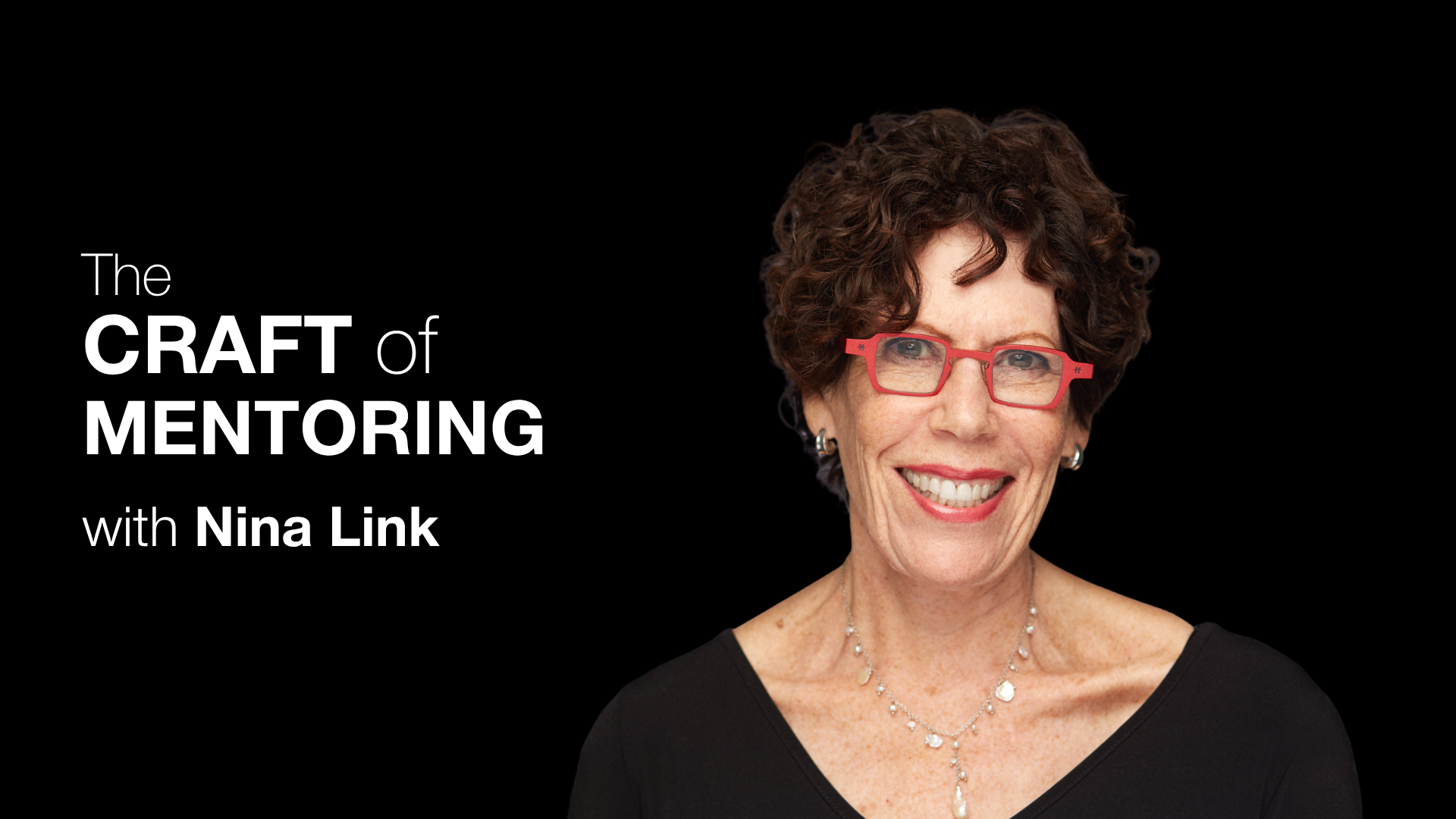
Nina Link, Former CEO of MPA – The Association of Magazine Media, and a mentor and coach at The ExCo Group, shares insights with Adam Bryant on building trust through honest communication, understanding the environments in which clients operate, and why leaders must choose courage over consensus.
Bryant: What for you is the secret sauce of effective mentoring?
Link: The most important thing is trust and building that trust so you can have really honest communication. That requires active listening and being able to pivot the conversation at any point based on what I’m hearing.
The other secret sauce is the case histories and examples that we have from all the mentoring we’ve done. Clients love to hear how other people have handled situations that are similar to what they’re facing. It helps them feel that they’re not alone.
Another key to mentoring is to really understand the environment in which our clients are working. It’s not just about the client; it’s also about the people around them, the values of the company, the strategy, and how they fit in. Understanding the culture helps us help our clients interact with key stakeholders and to navigate the challenges that inevitably arise.
Bryant: Is there a particular tool that you use that tends to lead to the biggest unlocks?
Link: The LVA (Leadership Values Assessment) is critical because it helps us hold up a mirror to our clients and show them how they’re perceived by others versus how they see themselves. That also highlights any differences in areas that my client thinks they should work on versus what others think their areas of improvement should be.
Another key tool is about stakeholders—a topic that has become more important to me over my years of mentoring. After all, your key stakeholders are either going to help you accelerate your success or they’re going to create barriers.
And sometimes people don’t see even their neutral relationships as something they need to work on. But I tell my clients that they need to have a plan to turn them into a positive. It doesn’t mean they have to love that person, but they need that relationship to work and they need to understand why it’s not working.
Bryant: Is there a particularly tough conversation you had to work through that ultimately landed in a good place?
Link: One of the toughest was a very high-ranking executive who was going to be taking over from a charismatic, beloved, brilliant leader. When I did the LVA and interviews, it was startling to learn that people said my client had no people skills. And this was someone who was going to be the most senior leader in his part of the company.
He was an introvert and had a lot of self-awareness, but it was still hard for him to hear. And yet, as hard as that was, it also created a clear path for him to work on. He didn’t have to change his personality—after all, there are brilliant, quiet leaders. We just had to focus on his strengths and look at ways to build his relationship skills. That became a big part of the development plan.
Bryant: What is the best lesson you learned from one of your mentors over the years?
Link: I had a mentor who taught me the importance of showing respect for people at all levels of an organization, and that includes the vendors you work with. He would always say, “You have to respect people. Give them some grace. People want to do a good job.” It’s an important point that I often share with clients who might be particularly hard on the people around them and under them.
As mentors, we often deal with people who are aggressive and ambitious, and they often don’t understand that it takes different styles to make something work. It doesn’t mean you let people get away with not doing their work or being incompetent, of course, but you have to show people respect.
Bryant: What’s the wisest thing you’ve read, heard or said in the context of leadership?
Link: Courage over consensus is an important theme these days. I have this conversation often with clients who have trouble making decisions or are more incremental in how they think about things. They don’t want to rock the boat. They don’t want to hurt anyone’s feelings. They’re afraid that something won’t work, so they don’t take the big swings. So I encourage them to believe in courage over consensus.
Bryant: Given all that’s going on in the world, how do you help your clients not feel
so overwhelmed?
Link: It goes back to knowing your North Star and remembering that the job of a leader is to bring people along by always communicating where you’re trying to go and how you plan to get there. You always have to provide context and explain the “why.”
This is critical, and I work with many leaders on making sure that they are helping people in the many layers below them understand the context of any pivot that needs to be made so that their teams will be more willing to make the pivot themselves. There is a lot of uncertainty, and you can’t make that go away, but you can help people understand the why behind your thinking and actions.
Recent