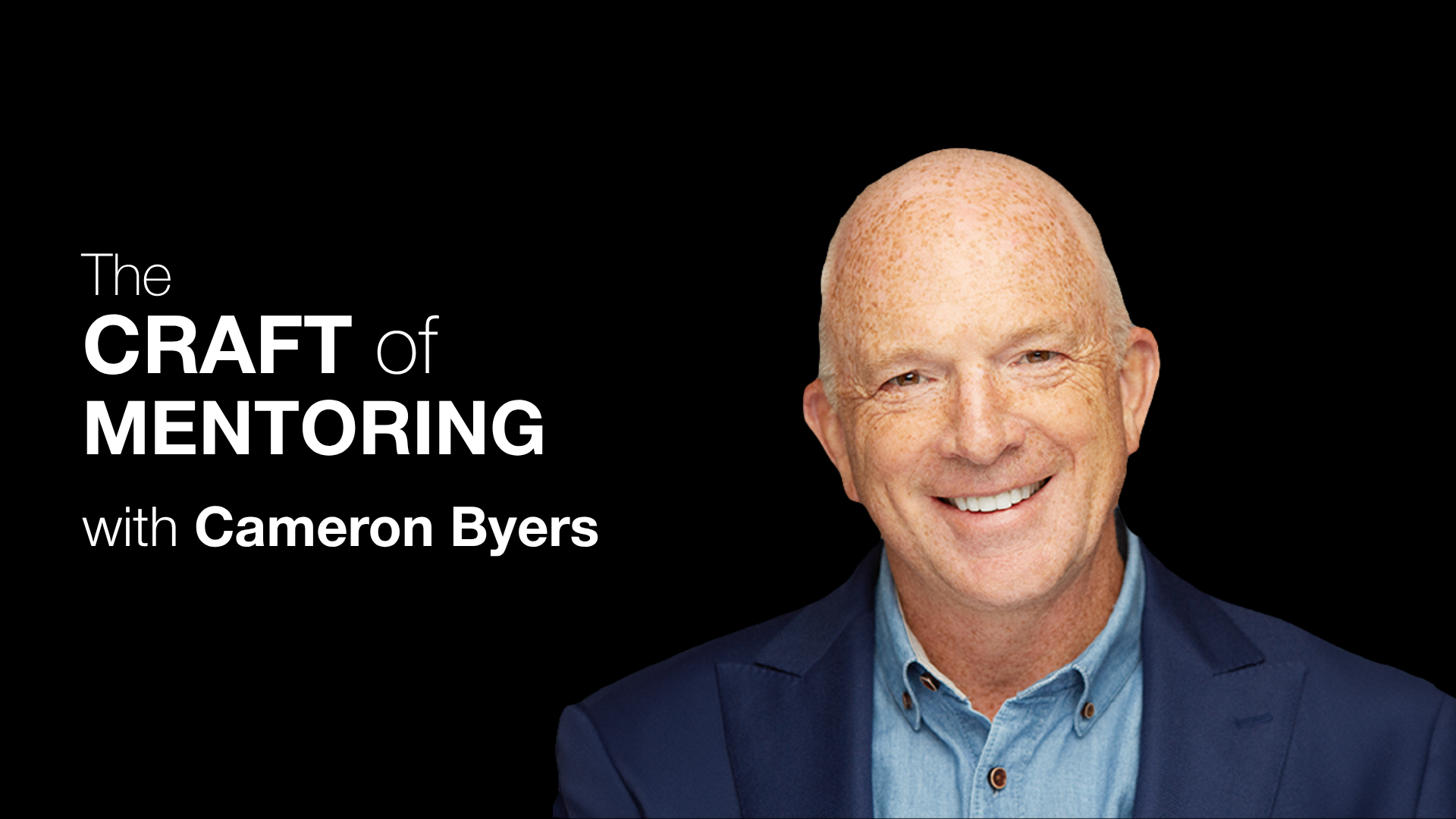
Cameron Byers, former President and CEO of BP Energy Co. NA and former SVP of Solazyme, Inc., and a mentor and coach at The ExCo Group, shares insights with Adam Bryant on building trust as an unbiased confidant, using the five C’s framework—calm, confident, credible, consistent, and courageous—and the importance of taking bold shots in leadership.
Q. What do you consider to be the secret sauce of effective mentoring?
A. You have to quickly build trust with your client, and that happens in part because we often are the only truly independent, unbiased confidant for clients. We have no other interest other than helping our client succeed.
Building that relationship includes asking them potentially uncomfortable questions. What are you afraid of? What are the stories you keep telling yourself? There are obvious benefits to the Socratic method. When someone solves a problem themselves, they are more likely to own the solution. That said, I don’t believe in the coaching model that says you should never give advice. There are times when they really do need new ways to think about a challenge they’re facing.
Q. Is there a particular tool or framework that you find leads to important unlocks?
A. I consistently use the lifeline exercise, in which people share the highs and lows of their lives, starting at an early age. I also use something called the lifespan wheel, which includes different aspects of your life, including family, work, personal time, energy, spiritual elements, and friends.
I ask my clients to score each one, from one to 10, on how satisfied they are in each of those sections. Then I ask them to think ahead one year, and how they would like to move those scores in those segments. That often helps them understand the ways in which they want to rebalance their lives.
Because leadership is so complex, I have focused a lot of conversations with clients over the years around three simple C’s: calm, confident, and credible. In recent years, I’ve added two more C’s—consistency and courage.
The courage discussion is particularly relevant for conversations about AI. I see many companies using it iteratively to become more efficient and productive by removing some of the mundane activities. But if you don’t have the courage to see this as a technology that can disrupt markets and business models very easily, then your own business may not be around much longer.
Q. Can you share a story of a tough conversation you had with a client that ultimately ended in a good place?
A. In one case, I learned early on—partly through the interviews I did with their colleagues—that nobody wanted to work for my client. They said she was very difficult to work with, verbally abusive, and showed no concern for her employees. Sharing that message was tough. It was a shock to her.
The good news was that we were able to break things down into manageable pieces, including working on her self-awareness. I encouraged her to meet socially with a few colleagues, as well as a couple of her friends, and to start those conversations by saying that she was looking for their help.
I said she should tell them that she heard the messages from the feedback and that she wanted some guidance on how she could improve. I told her to just listen and not be defensive. That vulnerability really opened things up for her, and she changed his approach. Yes, she did fall back to her default muscles when she was under stress, but people on her team were much happier overall, as was my client.
Q. What’s the best lesson you learned from one of your mentors over your career?
A. One was to “make sure the monkey doesn’t stay on your back.” When I first became a CEO after being chief operating officer, I found that everyone wanted time with me. A number of people would come to me almost every day with a problem or to complain about someone else on the team.
For a while, I struggled with that. Coming from an operating environment, I wanted to take the monkey off their back and solve the problem myself, or at least offer them a solution. My coach at the time told me to make sure that the monkey doesn’t stay on my back, and to put the problem back on the other person’s shoulders to solve.
Q. What is the wisest thing you’ve read, heard, or said in the context of leadership?
A. This goes back to my fifth C, which is courage. I often share the saying from Wayne Gretzky—“You miss 100 percent of the shots you don’t take.” I will often talk with people about why they should take those shots.
When I look back at my own experiences, the rewards of bold decisions I’ve made have been exponential. But companies can often be risk-averse, in part because senior leaders don’t see the forest for the trees. They’re operating in their own silos, and very often they are rewarded for doing so.
Recent