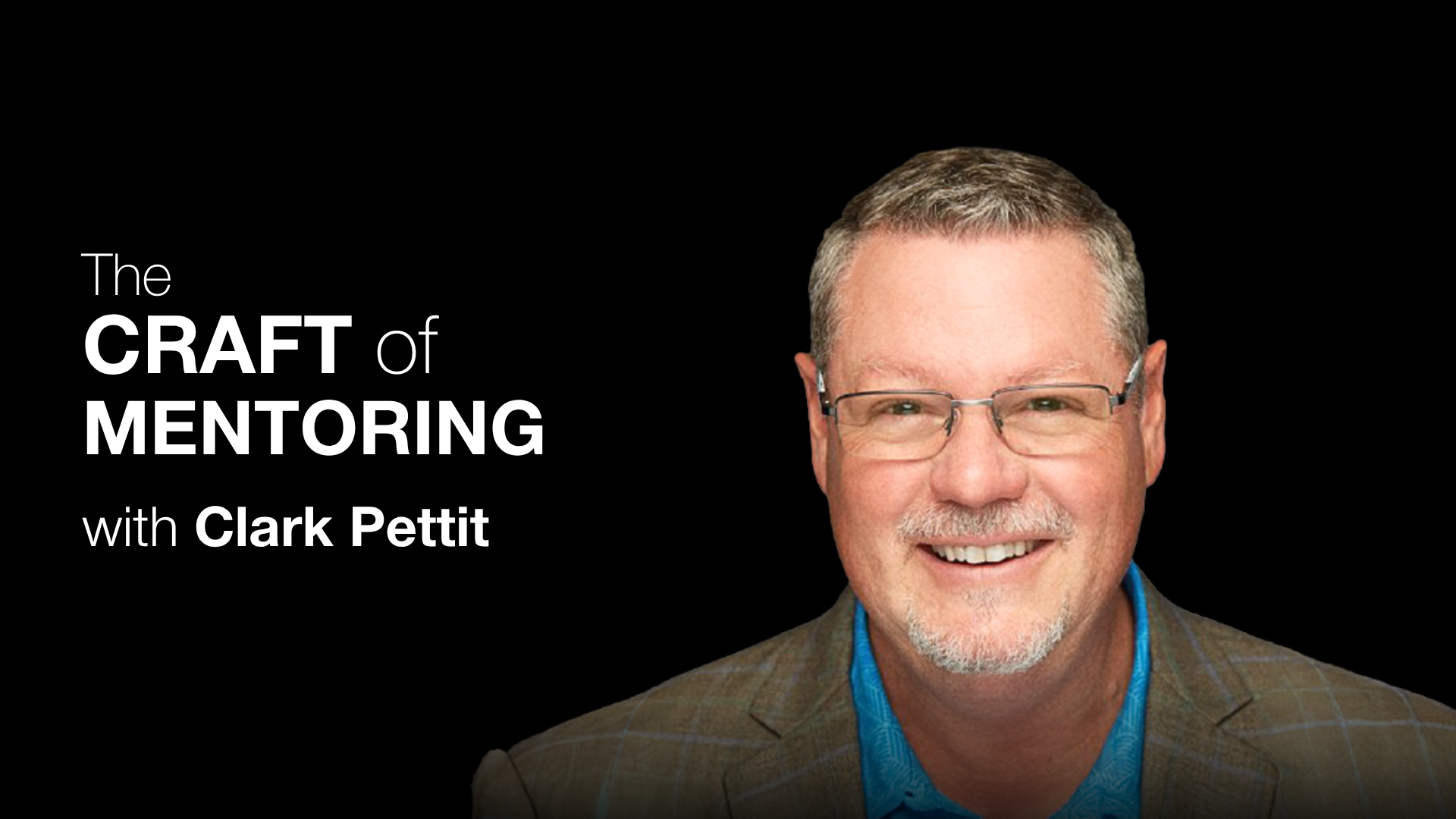
Clark Pettit, former President & CEO of the Association of Business Information and Media Companies (ABM) and a mentor and coach at The ExCo Group, shares insights with Adam Bryant on empathy and integrity as the foundation of effective mentoring, why leadership is entirely in the eyes of others, and the importance of helping leaders examine their core organizing principles.
Q. What do you consider to be the secret sauce of mentoring?
A. Two critical ideas are empathy and integrity. By empathy, I mean listening deeply for understanding my client’s context and suppressing any desire to say, “Oh, I know the answer.” You have to get to the heart of what the person is wrestling with—their human reality and human drivers within their professional context. And by empathy, I don’t mean sympathy. I don’t mean that I’m unsympathetic, but I want to solve for forward movement—what are we going to do about it? Being a victim doesn’t help.
Integrity, to me, is a combination of honesty and courage. The honesty is the willingness to challenge their interpretation and their understanding of the context, and to challenge their assumptions. Sometimes that means even challenging their framing of their worldview.
The courage kicks in when you have to reframe people’s thinking as constructively as possible. You want to create an “aha” moment that unlocks forward movement because their entire view of a challenge shifts. It’s much more powerful if you can get people to decide they want to change something.
Q. Which tool or framework tends to lead to the biggest unlocks for you?
A. One of them is that really impactful leadership has absolutely nothing to do with the projection of leadership. Most people spend a lot of time thinking about “I” questions—How do I influence others? How do I get people to follow me? How do I project what I control and what I’m trying to control?
And my reaction is that it’s not about you at all. Leadership is entirely in the eyes of others. It’s about the creation of followership, which is in the eyes of others, and it’s about creating clarity of co-ownership, which also is in the eyes of others.
Followership happens when people say, “I see where you’re going. I find it really compelling, and I want to be on that train.”And co-ownership means allowing others to help form and own a piece of the plan, rather than telling them what to do.
Everyone’s interpretation and worldviews are different, which means you have to be a bit of a chameleon to create followership. It’s not formulaic. It’s reading the room, and understanding the motivations of lots of different people, and then explaining the destination in ways that unlock everyone’s buy-in.
Q. Is there a story you can share about a tough conversation you had to have with a client that ultimately landed in a good place?
A. They fall into a consistent bucket. The really challenging ones are when someone is not being straight with themselves. I’m a firm believer in authentic leadership, which to me means being crystal clear on what you’re trying to galvanize and what you believe, and then being very clear on how to get others to understand it through their own eyes.
But that can fall apart when people are not being honest with themselves about what they actually think and believe, and there is some incongruity. It might be subconscious—maybe they haven’t thought about it enough. That manifests as not being in the zone, and not in flow. Their leadership approach seems formulaic, as if they were pretending.
If it’s a recurring pattern of behavior, that’s when the tough conversations have to happen. And those will start with me asking, “What is it about your understanding of the world that allows these patterns to keep occurring?” I’m trying to get people to step back and figure out what’s broken and what needs to be reframed and fixed.
Q. What’s a lasting lesson from one of your mentors over your career?
A. One lesson was about tapping into the motivations of people, even if it breaks the org structure in the short-term. Let’s say that something in the organization needs to be transformed, and there are a couple of people who are really interested in helping, even though it’s not their job. And their boss is going to be upset if I pull them into it, and somebody else is going to be upset because they assume it’s their job to work on it.
But if you’ve got to figure something out, and you’ve got people who have good insights and want to be a part of it, then you make that happen. The point is not to be constrained by the org structure, and to ask instead, Who can help figure this out and solve it?
Q. What are the most powerful moments of wisdom you’ve experienced in a mentoring relationship?
A. They’ve come when the person’s organizing principle for their life reaches an end in ways that they don’t fully realize. I’ll share an example. One leader I worked with had grown up very poor—they were homeless for a time, and had lived in a trailer. They were the A student, and had to succeed, earning promotion after promotion until they became a CEO.
Through the course of our conversations, it became clear that even though they were now financially independent, they had no idea how to let go of the fear they had lived with all their life. So we shifted to conversations about what it meant for them to be financially independent. We needed to pause all the conversations about their career stuff and figure out the organizing principle of their life, because they were still solving for something that they didn’t need to solve for anymore, because it was no longer relevant to their journey.
Q. How do you help people navigate this moment, when you have to lead amid so much ambiguity and uncertainty?
A. The analogy I use is that strategy is like whitewater rafting right now. You can see directionally downstream where you are going. There may be a point where the river branches in two directions. All you can do is move toward the next waypoint. But you have to have forward momentum and be very clear with everyone on where you’re going while also staying nimble.
In times of disruption, you need to have a small group of leaders on your team who can live and thrive in the uncertainty while you provide as much clarity and certainty as you can with everyone else.
Recent