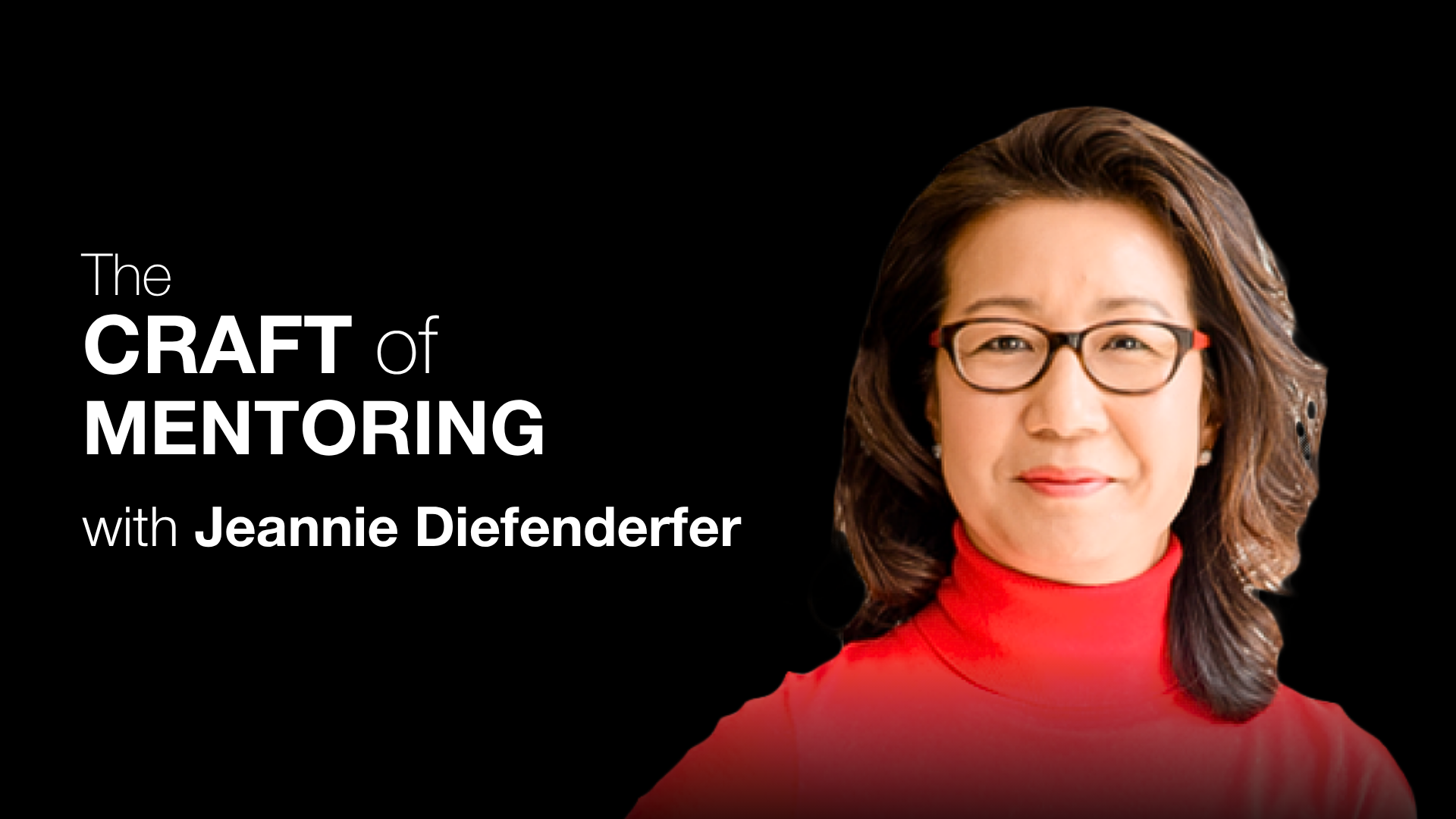
Jeannie Diefenderfer, former SVP of Global Engineering and Planning at Verizon, and independent director at DigitalBridge Group, and a mentor and coach at The ExCo Group, shares her leadership insights with Adam Bryant. They explore why the most effective leaders prioritize connection over control, the art of giving feedback that actually lands, and the importance of creating the space to talk.
Q. What are the X factors of effective mentoring for you?
A. One analogy I use is that it’s about knowing the right time to put the mirror up versus when to put the window up. Those moments that require the mirror are about reflection and self-awareness, while the window moments are about looking outward and understanding the larger context. Done right, that can be a powerful trigger that leads to aha moments.
I also use what’s often called “reflective listening” at key moments. After the other person speaks, I’ll say, “Let me tell you what I think I heard you say to make sure I’m getting it right.” I have found that to be super helpful for making sure there’s clarity around the intent of the conversation. I often say that our job is not to give someone some brilliant new idea—it’s usually about helping them to get clarity on what they already know but haven’t intentionally focused on.
But the most important thing in mentoring is that it isn’t about me. I have to meet the client where they are, in terms of what they need. It isn’t about my version of the story. It’s about making sure they can answer the questions themselves around motivations and intent and the potential consequences of their words and actions.
Q. Was there a difficult conversation you had to have with a client that ultimately landed in a good place?
A. I had a client who was describing a situation they were dealing with, and they shared with me their thoughts on the other person’s intention, and it wasn’t positive. The more I listened to them, thought, the more it struck me that there was no evidence to prove the negative intent. But the story they told was compelling, and the narrative took on a life of its own.
So I pressed them to unpack the story and explain to me how they came to that conclusion about that person’s intent. My client realized that they actually didn’t know if there was negative intent in the first place, and was able to pivot their next-step actions as a result.
Q. What’s the best lesson you learned from one of your mentors?
A. I had many mentors who never gave me the answer that I necessarily wanted. There were many moments when I was in a tough situation, when I wanted someone simply to tell me what to do. But the best ones would always say, “No, this is your call. I’ll share my thoughts that you can feed into the system, but this is your decision, and you have to live with it.” I didn’t like that early in my career, but it was such a great way to teach accountability.
Q. What is the wisest thing you’ve ever heard, read, or said?
A. I recently heard the saying, “What you can’t communicate controls you.” There are all these things that people live with, for one reason or another, that they don’t feel like they can talk about—shame, guilt, fear, and other negative feelings. They are part of the narratives that we tell ourselves, and often, we don’t realize how much they control us. It can be hard, but we should all look for opportunities to express those things.
Q. There’s so much disruption in the world. How do you help clients navigate this incredibly challenging moment for leadership?
A. The first thing is that you have to accept it. The worst thing that you can do is to deny it or to wish things weren’t the way they are. And as a leader, you have to give your people the space to talk about how they are feeling, and you need to share what you’re feeling, too.
Focusing on what you can control here and now helps leaders break through the paralysis their people can feel in a moment like this. Action is an antidote for feeling helpless and leaders can help their teams pick one or two meaningful actions they can do together, such as donating time and resources to community members in need.
Recent