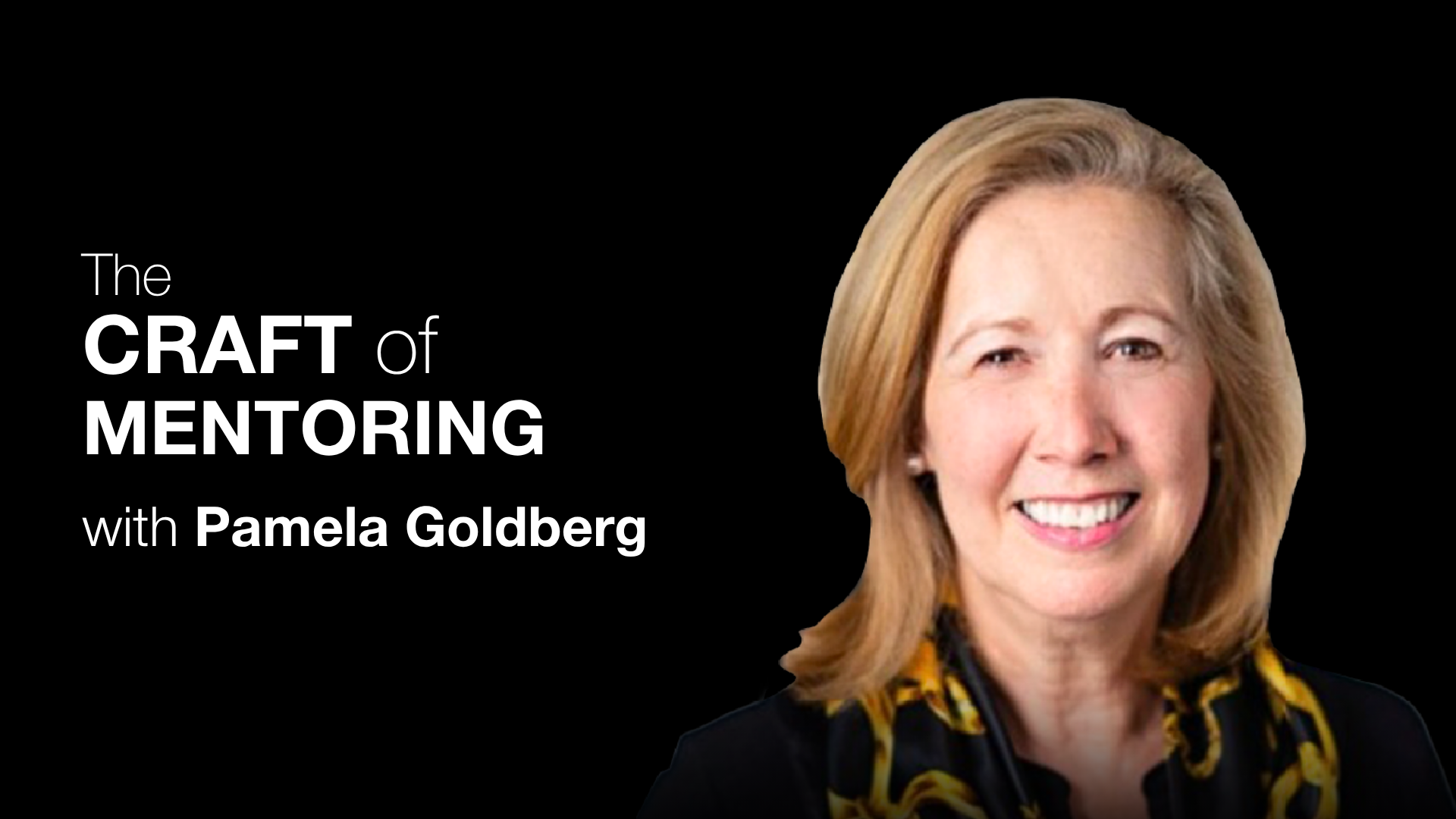
Pamela Goldberg, former President and CEO of the Medical Device Innovation Consortium (MDIC), and a mentor and coach at The ExCo Group, speaks with Adam Bryant about building trust through personal connection, helping clients take ownership of difficult relationships, and the power of listening more than speaking.
Q. What are the X factors of being an effective mentor?
A. It all starts with the chemistry meeting. When I first meet with a new prospective mentee, and we find a foundational connection, then we can start to build trust. It’s amazing how much more you can unearth when there is a powerful connection and real trust between the coach and the person being mentored.
Those personal connections can be small things, like having a few connections in common on LinkedIn, and we can share stories about how we know them. But in every situation, regardless of age, geography, or circumstance, there are always areas of commonality that can bring us closer.
I also built those connections by sharing how I was once in a situation that is similar to what my client is dealing with. I’ll talk about how I managed it, which may be different from the way they would handle it.
But it’s important to show that I’ve dealt with the same angst and challenge as my client. My clients know that I was a CEO, but they don’t necessarily think about the fact that I had other jobs leading up to that. So it’s helpful to remind them that I was once in their shoes and dealing with some of the same challenges.
Q. Is there a tool or framework that you use that typically leads to important unlocks?
A. We use a tool called a Lifeline in the early stages of the engagement. That almost always leads to someone being willing to share stories and being vulnerable. They talk about some of their greatest experiences and some of the hardest moments in their lives. I’ll share some vulnerable moments in my own life.
There’s also a lot of power in creating an action plan with my client to keep them focused on the key things they need to work on to grow their leadership skills, and to help keep their eye on long-term goals. That is an unlock for every single client—to have the luxury to think about how they can grow themselves as a leader.
Q. Is there a particularly tough conversation you had to have with a client that ultimately led to a good place?
A. One of my clients was having a difficult time with their supervisor. Everything was the supervisor’s fault, and nothing was their fault. We spent several sessions talking about managing up and what could be her boss’s perspective. I pointed out that maybe it wasn’t just that the boss was a bad leader; maybe my client wasn’t communicating in the best possible way with the supervisor.
Once they took ownership of the fact that they played a role here and adjusted the approach—including asking the boss for advice more often and no longer trying to be the smartest person in the room—it created some real breakthroughs. I saw the relationship between them become stronger, more transparent, and more collaborative. Problem relationships are rarely one-sided. It really takes two people to build a relationship or to break a relationship.
Q. What’s the best lesson you learned from a mentor of yours?
A. It’s about not trying to have all the answers and spending more time listening than talking. I was told at some point in my life that there’s a reason we have two ears and one mouth, and that we should spend more time listening than speaking.
That helped me as a leader earlier in my career, because it was something I had to learn. Like the client I just described, I was used to being the smart person, and I discovered I didn’t have to be because I could learn from others. It was a wonderful gift to realize that I could learn from everybody I encountered.
Q. So many leaders feel overwhelmed right now, given all that is going on in the world. How do you help them deal with that?
A. There is a lot of noise out there, so I work hard to recenter my clients by getting back to the basics of the business and focusing on those. Yes, we are a world at war right now. But you have to step back and ask, what are the direct or indirect impacts on my business? You always have to focus on the core principles of leadership.
Recent